
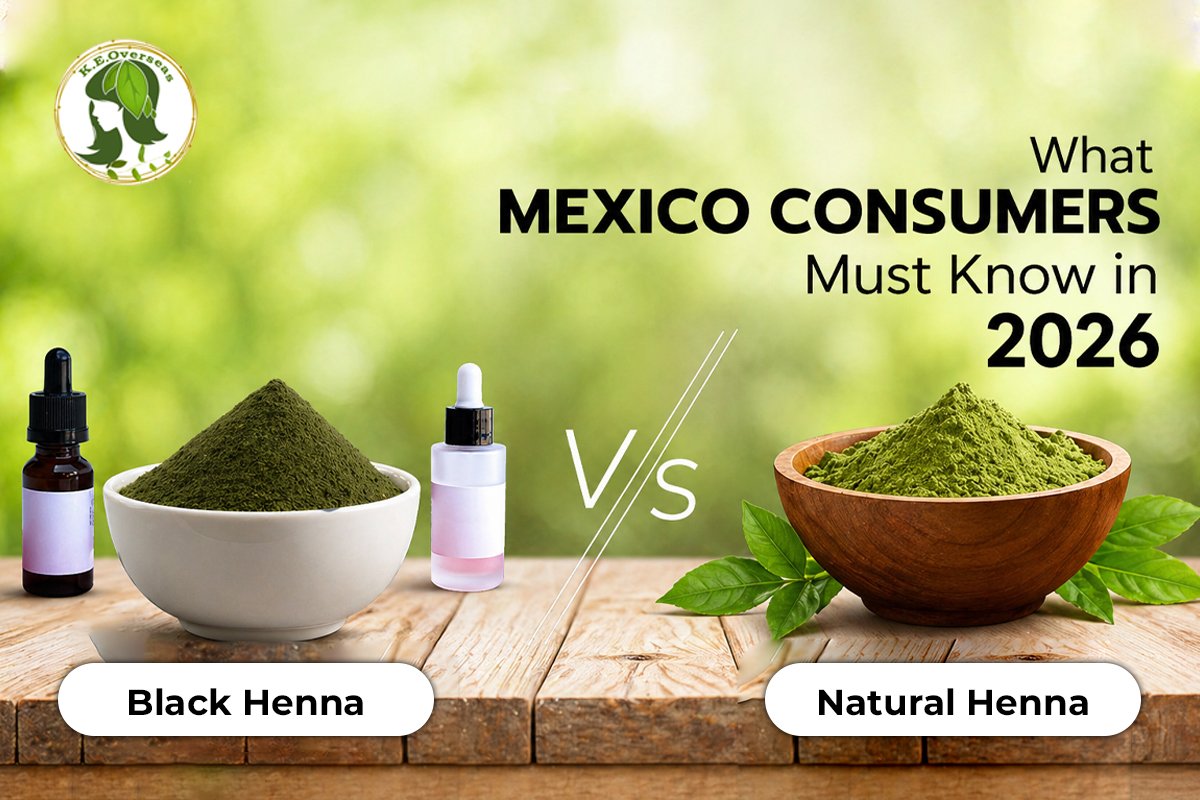
Natural Henna vs Black Henna: What Every Mexico Consumer Must Know in 2026
Quick answer: Real natural henna is never jet-black, never instant, and never chemical. If a vendor in Cabo San Lucas or Cancún claims their product is “black henna,” it almost certainly contains PPD — a synthetic dye linked to severe chemical burns. This guide explains the difference clearly so you can make a safe choice.
Mexico’s beauty market is changing fast. From the beach resorts of Los Cabos to the weekend markets of Mexico City, natural henna has moved from a seasonal souvenir to a serious hair and body-care option. Consumers today are reading labels, asking about ingredients, and demanding organic henna powder that actually works safely. But a dangerous copycat — known as black henna — is still causing real harm. In 2026, knowing the difference is not optional. It could protect your health for life.
What Is Natural Henna — Really?
Natural henna comes from the dried and powdered leaves of Lawsonia inermis, a shrub native to South Asia and North Africa. The plant produces a natural dye molecule called lawsone, which bonds with the keratin in your skin and hair to create a warm reddish-brown stain.
There are no shortcuts with the real thing. Genuine henna for hair takes time — usually 2 to 4 hours of sitting — and the resulting color develops slowly from orange to deep burgundy over 24 to 48 hours. The stain lasts 1 to 2 weeks on skin and can last much longer on hair. That slow process is not a flaw. It is proof that the chemistry is natural.
According to Wikipedia’s overview of hair coloring, plant-based dyes like henna have been used for thousands of years with a strong safety record — unlike modern synthetic dyes, which were only introduced in the 19th century and carry known allergy risks.
What Is Black Henna — and Why Is It Dangerous?
Here is the truth: black henna does not exist in nature. The term refers to a synthetic paste made with paraphenylenediamine — better known as PPD — sometimes mixed with a tiny amount of real henna to sound legitimate. PPD is the same chemical used in permanent hair dye manufacturers’ darkest formulas. At the concentrations used in “black henna” street kits, it is applied directly to skin, which is far more risky than scalp application.
Critical warning for Mexico tourists and residents: In beach towns like Cabo San Lucas, Playa del Carmen, and Puerto Vallarta, “black henna” tattoo stalls are common. A single application can cause blistering chemical burns within 24 hours. Worse, it can trigger lifelong PPD sensitization — meaning you may never be able to use a standard black henna hair dye or chemical hair color again without a severe reaction.
This is not a rare or theoretical risk. Dermatologists across Mexico and Europe have documented hundreds of cases. A 2024 review by dermatology researchers confirmed that PPD-related contact dermatitis from temporary tattoos remains one of the most preventable but serious cosmetic injuries globally.
Side-by-Side: Natural Henna vs Black Henna
Natural Henna
Color: orange to deep reddish-brown
Stain time: 2–4 hours minimum
Ingredient: lawsone from Lawsonia inermis
PPD: none
Risk: very low (rare mild allergy)
Shelf life: 12–18 months if stored cool and dry
Hair benefit: conditions, adds shine, covers gray
Avoid This
Black Henna (PPD)
Color: jet black, instantly dark
Stain time: 20–30 minutes (chemical reaction)
Ingredient: PPD + coal tar + unnamed additives
PPD: high concentration
Risk: chemical burns, scarring, lifelong sensitization
Shelf life: unpredictable; often unlabeled
Hair effect: damage, breakage, scalp burns
Mexico’s Clean Beauty Movement: Why This Matters Now
Something meaningful is happening in the Mexican beauty market. A growing number of consumers — especially women aged 18 to 40 — are actively rejecting synthetic dyes. They are moving toward organic henna powder, plant-based shampoos, and chemical-free hair treatments. Social media has accelerated this shift dramatically. TikTok tutorials showing DIY henna for hair now regularly hit millions of views in Spanish.
At the same time, premium salons in Mexico City, Guadalajara, and Monterrey are adding henna hair treatments to their menus. These salons need reliable, certified suppliers. The demand for professional-grade, safe natural henna has never been higher.
This is exactly where the risk of confusion grows. When consumers search for black henna for hair, they are often looking for a darker result — not the chemical compound. Mislabeled or counterfeit products exploit that search intent. Trustworthy hair color manufacturers address this by clearly labeling every ingredient and offering certified, traceable products.
Case Study: How Kirpal Export Overseas Solves the Supply Trust Problem
Case Study — B2B Supply Chain
Kirpal Export Overseas (KEO): Traceable Henna from Farm to Shelf
Kirpal Export Overseas (KEO) was founded around 2000 by Mr. Sunil Walia in Rajasthan, India — the heartland of Sojat henna cultivation. Today, with over 25 years of experience and Mrs. Payal Walia serving as Vice-President, KEO supplies natural henna powder, indigo powder, and herbal hair colors to importers and private-label brands across more than 30 countries, including Mexico.
The challenge KEO addresses: For Mexican importers, salon chains, and OEM brands, the hardest part of sourcing henna is verification. Is the powder pure? Is it free of PPD and heavy metals? Does it meet international export documentation requirements? KEO answers each of these questions through a vertically integrated model: they farm, process, formulate, and package under one quality system.
What makes KEO different:
- Farm-to-export traceability: KEO publishes photos of its own henna and indigo farms, allowing buyers to verify raw material provenance before placing an order.
- Certifications: ISO, GMP, and HALAL certifications give Mexican importers the documentation they need for regulatory compliance.
- OEM and private label: Brands entering Mexico’s clean-beauty market can launch their own labeled organic henna powder products with KEO’s manufacturing support — from formula development to export-ready packaging.
- Active packaging: Henna degrades in heat and humidity — a real concern in Mexico’s coastal climate. KEO uses active packaging technology specifically designed to protect ingredient potency during shipping and storage.
For context on how leading suppliers are shaping Mexico’s henna market, this overview from Payal Walia details how hair dye manufacturers are responding to local consumer demand for safer formulas.
Key outcome: Mexican salon buyers who source from certified manufacturers like KEO can confidently market their services as “chemical-free” — a label that commands a significant price premium in 2026’s competitive beauty landscape.
How to Spot Real Natural Henna: A Practical Checklist
Whether you are a consumer buying at a market in Oaxaca or a salon owner sourcing a bulk order, these checks apply every time.
01
Check the color. Fresh, quality natural henna powder is green. The paste is khaki or olive, never black.
02
Read the ingredient list. The only active ingredient should be Lawsonia inermis leaf powder. No PPD, no resorcinol.
03
Question fast results. If a vendor says “it stains in 10 minutes,” walk away. Natural henna takes at least 2 hours.
04
Ask for certification. Reputable suppliers provide ISO or GMP documentation. Ask before you buy in bulk.
05
Store it right. Real henna powder degrades in Mexico’s heat. Store in an airtight container away from sunlight — or buy from brands using active packaging.
06
Do a patch test. Even genuine henna can cause a mild reaction in rare cases. Always test 24 hours before full application.
Natural Henna for Hair: Benefits Mexico Consumers Should Know
Beyond body art, henna for hair is gaining serious traction in Mexican salons as a treatment — not just a color. Here is what the plant actually does:
- It deposits color without lifting the hair’s natural melanin, which means it conditions rather than strips.
- It strengthens the hair shaft by bonding with the keratin protein, reducing breakage over time.
- Mixed with indigo powder, it can produce shades ranging from auburn to a very deep brown — giving herbal hair color options that rival synthetic dye ranges.
- It covers gray hair effectively. Many users over 40 are switching from chemical dyes specifically to address gray without the scalp sensitivity issues that come with PPD-based products.
- It is vegan, biodegradable, and — when sourced correctly — genuinely organic.
One common concern in Mexico is dryness. Pure henna can feel drying when used frequently. The fix is simple: add aloe vera gel or a small amount of coconut oil to the mix before application. Sunil Walia’s guide for hair color manufacturers covers these formulation details for professional buyers who want to deliver consistent, moisturizing results at the salon level.
Choosing the Right Shade: Henna and Skin Undertone
One of the most common questions Mexican consumers ask is whether henna will suit their complexion. The answer depends on both the formulation and the underlying skin undertone.
Warm undertones — golden, olive, or tan skin common across Mexico — tend to bring out the richest reds and burgundies in natural henna. Cooler undertones can use an indigo blend to shift the result toward a deeper, cooler brown. A detailed hair color guide by skin undertone can help salons and consumers match the right formula to the individual. For a personal take, this first-hand account of choosing hair color by skin type offers a relatable perspective.
Frequently Asked Questions
- Is natural henna safe for children?
Ans. Pure natural henna made from Lawsonia inermis only is generally considered safe for children’s skin. However, black henna is never safe for children — PPD reactions are more severe in young skin. Always check the ingredient list before allowing any application on a child.
- Can I use natural henna to cover gray hair completely?
Ans. Yes, with patience. Pure henna covers gray with a warm orange-red hue. For a deeper, darker shade, combine henna with indigo powder in a two-step or blend process. Many people find this combination covers gray just as effectively as chemical dye — without the scalp sensitivity.
- Where can I buy certified organic henna powder in Mexico?
Ans. Look for products from certified manufacturers that carry ISO, GMP, or HALAL documentation. Importers working with established Indian suppliers like Kirpal Export Overseas can offer private-label organic henna powder that meets Mexican and international safety standards. Check the label — if the brand cannot show certification, look elsewhere.
- What should I do if I have a reaction to black henna?
Ans. Wash the area immediately with mild soap and cool water. Do not scratch blisters. See a dermatologist as soon as possible — PPD reactions can escalate quickly and require medical treatment. Keep records of the product and vendor, as you may need to avoid all PPD-containing hair dyes permanently going forward.
- How long does natural henna last on hair versus skin?
Ans. On skin, a natural henna stain lasts 1 to 3 weeks depending on skin type, body placement, and aftercare. On hair, the color is semi-permanent and fades gradually over 4 to 8 weeks. Unlike chemical dye, it does not create a visible root line — it simply fades gently as hair grows.
The Bottom Line for Mexico Consumers
The choice between natural henna and black henna is not a matter of aesthetics. It is a matter of safety. Mexico’s clean beauty market is growing because consumers are asking better questions — and they deserve better answers.
Real organic henna powder is green, earthy, slow, and beautiful. It has thousands of years of safe use behind it. Black henna is a marketing term for a chemical product that should not be applied to human skin at all.
When buying henna in Mexico — whether for a beach tattoo, a salon service, or a DIY hair treatment at home — ask for the ingredient list. Look for certification. Choose suppliers who can prove what is in the product. Your skin and your hair health are worth it.