
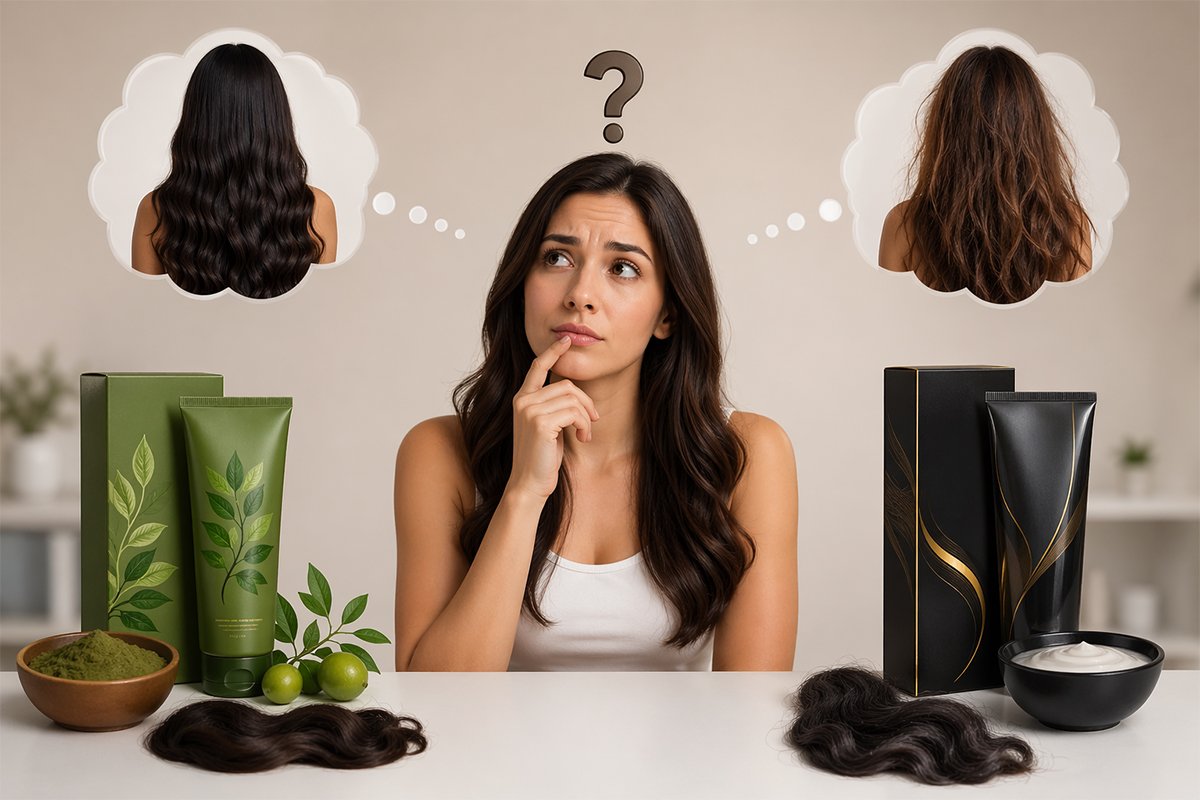
Hair Color Manufacturers in Mexico: Which Hair Coloring Products Are Actually Safe for Hair Loss?
My cousin María José started coloring her hair at 22. By 27, she was shedding clumps in the shower. Her dermatologist said it straight: “The dye you’re using is burning your scalp every six weeks.”
She is not the only one. Across Mexico — from salons in CDMX to small beauty shops in Monterrey — women and men are noticing the same thing. They color their hair. Their hair thins. They wonder what went wrong.
The honest answer is this: some hair dye products are simply not safe for regular use. But not all of them are bad. Knowing the difference — and knowing which hair color manufacturers actually care about what goes into their formulas — can save your hair. Literally.
What Is Actually Happening to Your Hair When You Dye It?
Think of a hair strand like a straw. It has an outer layer — the cuticle — that protects everything inside. When you apply most permanent hair color, the chemicals force that outer layer open. Color goes in. Chemicals go in too.
The two biggest offenders inside most commercial dyes are:
- Ammonia — it pries the hair shaft open. Every time you use it, the shaft gets weaker.
- PPD (paraphenylenediamine) — a synthetic pigment that causes allergic reactions in many people, including scalp inflammation.
That inflammation is the real enemy. When your scalp is irritated over and over again, hair follicles suffer. They produce thinner strands. Some stop producing altogether.
Research and dermatology sources confirm that repeated chemical exposure disrupts the natural hair growth cycle. This is not a scare tactic — it is just how follicle biology works.
So the question is not “should I stop coloring my hair?” Most people are not going to do that. The question is: which products are actually safe enough to use without destroying your scalp?
The Safest Hair Color Options — Ranked Honestly
1. Pure Henna — The Oldest Trick That Actually Works
Henna has been used for thousands of years. The plant it comes from — Lawsonia inermis — produces a dye that sits on top of the hair shaft rather than forcing its way inside. That is a very big difference.
Because henna coats the strand instead of penetrating it:
- It does not break down the cuticle layer.
- It adds a slight thickening effect, which helps with thinning hair.
- It conditions as it colors — your hair feels softer after use, not drier.
- There is no ammonia. No peroxide. No PPD.
The color range from pure henna is mostly reddish-brown. But when you blend it with indigo powder, you can get darker browns and even near-black shades — all still chemical-free.
One thing to know: “black henna” sold at some markets is not real henna. It contains PPD. Avoid it completely, especially if you already have scalp sensitivity.
For a broader history of how henna fits into global hair coloring traditions, Wikipedia’s overview of hair coloring is worth a quick read.
2. Semi-Permanent Hair Color — The Safer Middle Ground
Not everyone wants henna tones. That is fair. If you want to stay closer to salon-style color, semi permanent hair color is a much smarter choice than permanent dye — especially for people dealing with hair loss.
Here is why:
Semi-permanent formulas do not fully penetrate the hair shaft. They deposit color on the outer layer and fade gradually over four to six weeks. No deep chemical reaction. No oxidative damage to the follicle.
The key is reading the label. Look for:
- Ammonia-free
- Peroxide-free
- PPD-free
- Dermatologist-tested
These are not just marketing words. Each of those absences means one less thing attacking your scalp every time you color.
In Mexico, ammonia-free semi-permanent options are becoming easier to find — especially as more importers source from responsible hair color manufacturers who have shifted toward cleaner formulations.
3. Herbal Blends — Color With Added Scalp Benefits
This category sits between henna and salon dye. Herbal hair colors mix plant-based dyes with traditional Ayurvedic herbs that have their own benefits for scalp health.
Common herbs you will see in quality herbal hair color blends:
- Bhringraj — widely used in India as a hair treatment for hair growth. It stimulates follicles and reduces shedding.
- Amla (Indian gooseberry) — rich in Vitamin C; strengthens the scalp and slows early greying.
- Shikakai — a gentle natural cleanser that does not strip your scalp of its natural oils.
- Cassia Obovata — adds shine and body without changing the hair’s base color much.
Manufacturers like Kirpal Export Overseas produce these herbal blends with ISO, GMP, and HALAL certifications. Their formulas combine henna, indigo, and these herbs to create full color ranges — without a single synthetic chemical.
For Mexican consumers and importers, that certification stack matters. It means the product has been tested for purity and is safe for export-grade use.
Ingredients You Should Refuse to Put on Your Scalp
If the label contains any of these, set the bottle down:
| Ingredient | What It Does to Your Hair |
| Ammonia | Strips protective oils; weakens the follicle wall |
| High-concentration hydrogen peroxide | Causes oxidative stress on scalp tissue |
| Resorcinol | Hormonal disruptor linked to hair cycle interference |
| PPD | Triggers allergic reactions and scalp inflammation |
| Formaldehyde | Toxic to scalp cells; linked to long-term follicle damage |
| Synthetic fragrance blends | Common hidden irritant for sensitive scalps |
Avoiding these is one of the simplest and most effective hair products for hair loss strategies available. You do not need a prescription or a specialist appointment. You just need to read labels.
A Real Story: One Brand in Mexico That Made the Switch
A private-label beauty company based in Guadalajara — mid-size, supplying to salons across Jalisco — started getting complaints in 2023. Salon owners reported that clients who used their boxed dye every six weeks were experiencing scalp sensitivity and noticeably more shedding.
The brand’s product manager did an ingredient audit. The formula they had been using from their previous supplier contained ammonia and a mid-range concentration of PPD — nothing unusual for the conventional dye market, but enough to cause cumulative scalp damage with frequent use.
They made a decision to switch suppliers entirely.
After researching certified hair color manufacturers, they reached out to Kirpal Export Overseas (KEO) — an India-based manufacturer with over 25 years of experience in henna, indigo, and herbal hair color production. KEO operates its own henna and indigo farms, which the Guadalajara team verified through photos and buyer-visit documentation.
KEO supplied them with:
- Pure Sojat henna powder (traceable, farm-to-package)
- Indigo powder for brown and dark shades
- A custom herbal blend including bhringraj and amla — functioning as a hair treatment for hair growth within the color itself
Because KEO offers OEM and private-label services, the Guadalajara brand kept their existing packaging and product line name. Only the formula changed.
Within a year, customer complaints about scalp sensitivity had dropped sharply. More importantly, their reorder rate improved — customers kept buying because their hair felt different. Healthier. Fuller.
This is what it looks like when a brand stops treating hair color as just a cosmetic and starts thinking about it as a hair treatment too.
Picking the Right Shade Without Sacrificing Safety
Once you commit to a safer formula, the next question is color. A lot of people get this wrong — they pick a shade that looks good on the box but wrong on their face.
A few practical rules:
- Match your skin undertone first. Warm undertones look better with golden, copper, or warm brown shades. Cool undertones suit ash, platinum, or cool browns. For a proper breakdown, read 7 Best Hair Colors by Skin Undertone.
- Patch test every new formula. Even natural products can cause reactions in some people. Test behind the ear 48 hours before full application.
- Start lighter. You can always go darker. Going from dark to light requires bleach, which is far more damaging.
- Give your scalp recovery time. Wait at least six to eight weeks between color applications. More if you notice sensitivity.
- Protect the scalp during application. A thin layer of coconut or argan oil along the hairline creates a barrier. It is an old salon trick that works.
If you want to hear what choosing the right shade actually looks like from a consumer’s point of view — not a brand’s — this piece on Vocal Media is an honest personal account worth reading before your next salon visit.
What to Do After Coloring — Hair Treatment for Hair Growth
Even if you switch to herbal or semi-permanent color, some existing damage may need time and care to recover. Here are the most practical hair treatment for hair growth steps to pair with safer coloring:
- Daily scalp massage (5 minutes): Increases blood circulation to follicles. It costs nothing. Consistency matters more than technique.
- Protein treatments every 2–3 weeks: Restores the hair shaft after any kind of chemical exposure. Look for egg-based or keratin masks.
- Biotin and zinc: Nutritional support for the hair growth cycle. Talk to a doctor before adding supplements — these help most when there is an actual deficiency.
- Herbal rinses: Rosemary, green tea, and nettle rinses have a long tradition in Mexico as home-based treatment for hair growth. Brew strong, cool, and pour over the scalp after washing.
- No heat tools for 48 hours after coloring: The hair shaft is at its most fragile right after a dye session. Blow dryers and flat irons during this window make the damage worse.
Herbal Hair Colors also offers a range of post-color natural hair treatment products if you prefer a ready-made solution without synthetic additives.
What Buyers in Mexico Should Know Before Purchasing
Mexico’s demand for natural beauty products is growing fast. Consumers here are increasingly reading ingredient labels and asking questions their grandmothers never had to ask. That is a good shift.
A few country-specific things to keep in mind:
- COFEPRIS registration: Any hair color sold legally in Mexico should be registered with Mexico’s Federal Commission for the Protection against Sanitary Risk. This confirms at least baseline safety standards have been met.
- Ask about origin: Products from manufacturers with ISO and GMP certification — especially those who can show you their sourcing chain — are more trustworthy than anonymous imports.
- HALAL and organic markers: These signal cleaner sourcing practices and stricter ingredient controls.
- India-sourced henna: Mexico has a growing number of importers who source henna and herbal dyes directly from Indian manufacturers. When the source is traceable and certified, this is one of the most reliable pipelines for quality natural hair color in the market.
FAQs
- Can hair dye cause permanent hair loss?
Ans. Repeated use of chemical dye can damage follicles over time. For most people, hair loss from dyeing is reversible if caught early. But sustained scalp inflammation — from years of strong chemical exposure — can sometimes cause lasting follicle damage. - Is all henna safe?
Ans. Pure henna from a traceable source is safe for almost everyone. “Black henna” is not — it contains PPD. Always check what you are buying, and buy from manufacturers who publish ingredient lists and certifications. - How often can I use herbal hair color
Ans. Most herbal hair color formulas are gentle enough to use every four to six weeks. Pure henna can often be used more frequently because it conditions the hair rather than stripping it.
- Can I use semi-permanent dye during hair loss treatment?
Ans. In most cases, yes — especially ammonia-free and peroxide-free options. Always check with your dermatologist first if you are undergoing medical hair treatment for hair loss. - Where can I find reliable herbal hair color for wholesale or OEM supply in Mexico?
Ans. Kirpal Export Overseas is a well-established supplier with direct farm-to-export operations in henna and herbal hair color. They serve international markets including Latin America through OEM and private-label programs.
The Bottom Line
Hair color and hair health are not mutually exclusive. You do not have to choose one or the other.
What you do have to choose is which products you trust — and which hair color manufacturers are genuinely transparent about what they put in their formulas.
For people in Mexico dealing with thinning hair or scalp sensitivity, the practical path is clear: shift toward henna-based or semi permanent hair color formulas, check your labels, support your scalp with a simple hair treatment routine, and give your follicles the recovery time they need.
Your hair grew with you for years. Treat it accordingly.