
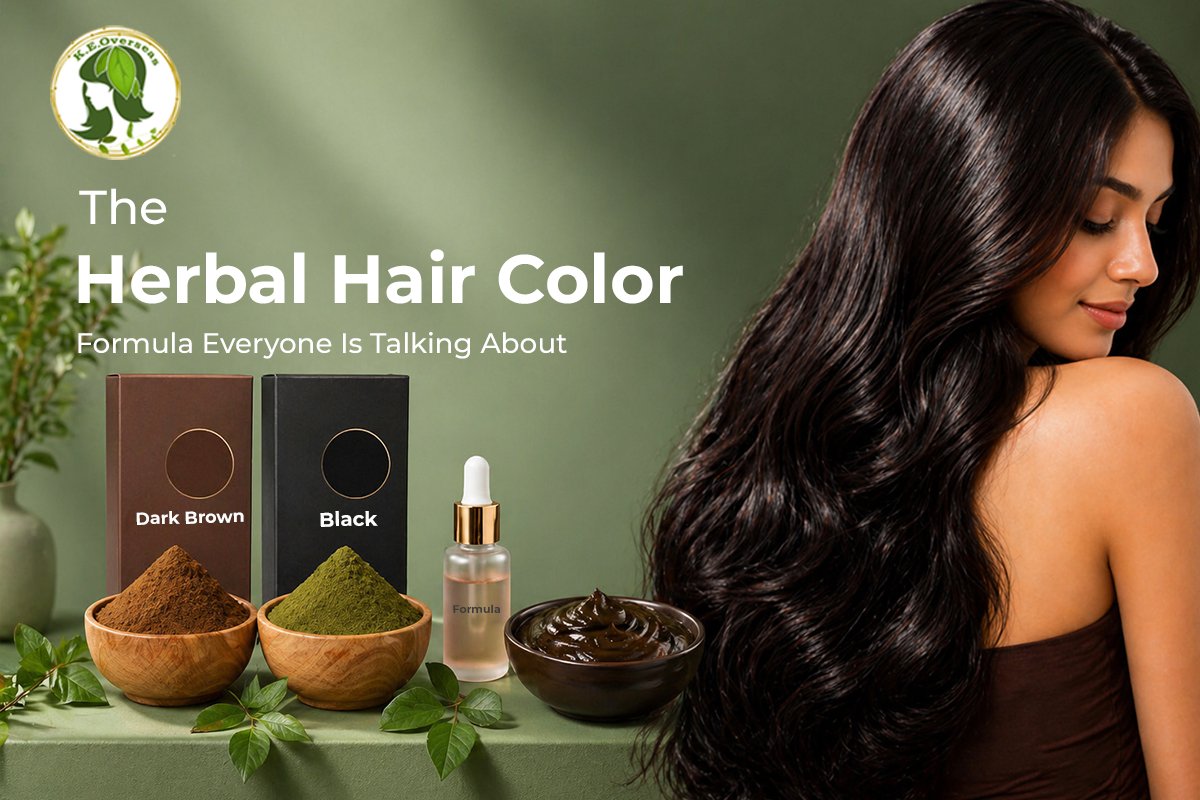
The Herbal Hair Color Formula Everyone Is Talking About for Dark Brown and Black Shades
The formula is not new. It has been used in South Asia for centuries. But the way it is being made and packaged today has changed completely. And that is why it is finally working for people in Western markets who tried it years ago and gave up.
This article explains what the formula actually is, how it works on dark brown and black shades, and what you need to know before buying or sourcing it. We will also look at a real-world example of a manufacturer who has been doing this correctly for over two decades.
What Is Herbal Hair Color, Exactly?
Herbal hair color is a plant-based alternative to conventional hair dye. Instead of using oxidative chemicals to change hair color, it relies on natural pigments found in plants. The two most important ones are:
- Lawsone — found in henna leaves. This binds to the keratin in your hair and deposits a warm reddish-brown tone.
- Indigotin — found in indigo plants. When combined with henna, it shifts the color toward dark brown and black.
Together, these two ingredients form the core of every serious herbal hair color formula for dark shades. Neither one alone gives you dark brown or black. It is the combination — and the ratio — that makes the difference.
According to HerbalHairColors.com, the rising consumer preference for chemical-free hair care has pushed this category into mainstream retail in North America and Europe. What was once considered a niche or ethnic product is now stocked in Whole Foods, pharmacies, and online platforms globally.
Why This Formula Works for Dark Brown and Black Shades
A lot of people tried natural hair dye in the past and got an unwanted orange result. That happened because they used henna alone. Pure henna gives a reddish-orange stain — beautiful for some, but not what most people want when they are trying to cover grey hair or go darker.
The formula for dark shades requires a two-step process:
- Apply henna first.Mix the henna powder with slightly acidic water (lemon juice or apple cider vinegar works). Apply to hair and leave for 1–3 hours depending on your hair type. Rinse thoroughly.
- Apply indigo second.Mix indigo powder with plain water (no acid — indigo needs a neutral environment). Apply to the still-damp hair within 15–30 minutes of mixing. Leave for 1–2 hours, then rinse.
The chemistry behind this is precise. Henna deposits lawsone onto the hair shaft first. Then indigo bonds on top of that layer. Together they create a brown-to-black result depending on proportions and processing time. For jet black, you use more indigo. For dark brown, the ratio shifts toward henna.
For detailed guidance on choosing the right shade for your complexion, this hair color by skin undertone guide from Kirpal Export breaks down which shades work best for different skin tones — including specific formulas for warm, cool, and neutral undertones.
Why USA, European, and Japanese Consumers Are Choosing This Now
The shift is not just about curiosity. It is driven by real concerns about conventional hair color ingredients.
| What People Are Avoiding | Why It Matters |
| PPD (para-phenylenediamine) | Linked to allergic reactions, banned in some concentrations in EU |
| Ammonia | Damages the hair cuticle, causes long-term brittleness |
| Resorcinol | Endocrine disruptor, restricted in cosmetics regulations |
| Synthetic fragrance | Can mask sensitizing compounds; undisclosed allergens |
In Japan specifically, where cosmetic ingredient safety standards are among the most demanding in the world, herbal hair color products that clear Japanese regulatory requirements have seen significant growth. EU cosmetic regulation (EC 1223/2009) also restricts several conventional dye intermediates, creating space for plant-based alternatives that comply more easily.
In the USA, the clean beauty movement has made “free from” claims a purchasing driver — and herbal hair color that is PPD-free, ammonia-free, and paraben-free checks every box that conscious consumers are looking for.
If you are curious about how personal experience factors into choosing hair color in real life, this piece on how one person chose the right hair color for their skin tone offers a refreshingly honest first-hand perspective.
Case Study
Kirpal Export Overseas (KEO): 25 Years of Getting the Formula Right
Kirpal Export Overseas, founded around 2000 by Mr. Sunil Walia and led jointly with Vice-President Mrs. Payal Walia, operates from Rajasthan, India — the source region for the world’s best henna. The company has been supplying herbal hair color raw materials and finished products to international markets for over two decades.
What separates KEO from commodity suppliers is vertical integration. They maintain their own henna and indigo farms. That means the journey from plant to finished product is traceable, controlled, and documented — which matters enormously to buyers in regulated markets like the EU and Japan.
KEO holds ISO, GMP, and HALAL certifications. Their product range covers natural henna powder, indigo powder, henna-based hair color blends, beard and eyebrow color, and a full range of herbal hair care products.
For brands looking to launch their own natural hair dye line, KEO also offers private label hair color manufacturing — handling everything from formulation and sampling to packaging design and export logistics.
“We have been doing this since before it was a trend. The formula hasn’t changed — but the world has finally caught up with what we have always known works.” — Sunil Walia, Kirpal Export Overseas
What Makes a Good Herbal Hair Color Formula — and What to Watch Out For
Not every herbal hair color product on the market is actually herbal. Here are the things that distinguish a well-made formula from a poorly made one:
Signs of Quality
- Henna powder with lawsone content above 1.4% (confirmed by CoA/lab test)
- Indigo powder with indigotin content above 1.5%
- No PPD, metallic salts, synthetic preservatives, or undisclosed colorants
- GMP-certified production facility
- Moisture-barrier packaging to protect active compounds during shipping
- Visible batch dating and harvest year on the label
Signs to Be Careful About
- Vague “100% natural” claims with no third-party verification
- No ingredient list or a very short one that omits components
- No expiry date or a suspiciously long shelf life claim
- Price significantly below the market average without explanation
For a deeper look at how quality henna shapes the best results, this guide on the best henna for hair color manufacturers covers what professionals in the industry actually look for when sourcing raw materials.
📷 The Formula in Practice: A Simple Guide for First-Time Users
If you are using a henna-indigo based herbal hair color for the first time, here is what actually helps:
Before You Start
Do a patch test 48 hours in advance, even with natural products. This is especially important if you have previously used conventional hair dye with PPD, as prior sensitization can affect how your skin reacts to botanical ingredients in rare cases.
- Use filtered or mineral water for mixing. Chlorinated tap water can interfere with the dye release process.
- Apply to dry, unwashed hair. Natural scalp oils help the henna adhere more evenly.
- Cover with a shower cap. Keep the mixture moist during processing. Drying out mid-application reduces coverage.
- Rinse without shampoo first. Let water do the work initially. Shampoo can strip the color before it has fully set.
- Wait 48–72 hours before shampooing. The color continues to oxidize and deepen after rinsing. Dark shades especially benefit from this waiting period.
The trend for herbal color in Mexico and other Latin American markets follows a very similar path to what happened in Europe and the USA. This piece on hair dye manufacturers leading Mexico’s henna trend shows just how global this shift has become — and why the formula is resonating across such different markets.
Frequently Asked Questions
Q: Does herbal hair color really cover grey hair?
Yes — but it works best with the two-step henna-indigo process. Pure henna alone gives orange-red results. The combination with indigo is what gives you dark brown and black coverage on grey hair. Results depend on hair texture, porosity, and grey percentage.
Q: Is herbal hair color permanent?
It is semi-permanent in the sense that it does not wash out with shampoo, but it does fade gradually over weeks. It does not grow out as an obvious root line the way oxidative hair color does, because it does not penetrate the cortex. Most users reapply every 4–6 weeks for full coverage.
Q: Can I use herbal hair color on chemically treated hair?
Generally yes, but with caution. Previously colored or bleached hair has high porosity and can absorb henna more intensely, leading to deeper-than-expected results. A strand test is strongly recommended before a full application.
Q: Where can I source herbal hair color for private label or wholesale?
For bulk sourcing or private label manufacturing, look for suppliers with GMP and ISO certifications, verifiable origin documentation, and export experience in your target market. KEO (Kirpal Export Overseas) is one of the few manufacturers with both farm-to-product traceability and active export compliance for EU, USA, and Japan markets. You can learn more at their Google profile.
Q: Is there any risk of allergic reaction with natural hair dye?
Pure henna and indigo have a very low sensitization rate compared to PPD-based hair dye. However, products marketed as “herbal” are not always purely botanical — some contain undisclosed additives. Always check ingredient lists and choose suppliers who provide full transparency about what is in their formulation.
Final Thoughts
The formula for dark brown and black herbal hair color has been working quietly for generations. What has changed is the quality of sourcing, the standards of manufacturing, and the awareness among consumers in the USA, Europe, and Japan of why it matters to know what is actually in their hair color product.
Henna and indigo, sourced properly and formulated with care, give consistent, beautiful dark results without the health trade-offs of conventional hair dye. The market has caught up to what good manufacturers have known for decades.
If you are buying for personal use — take the time to verify your source. If you are sourcing for a brand — demand documentation, test before committing, and build relationships with suppliers who have the transparency and certifications to back their claims.
The formula is not complicated. Finding someone who executes it honestly is the part that takes a little more work.