
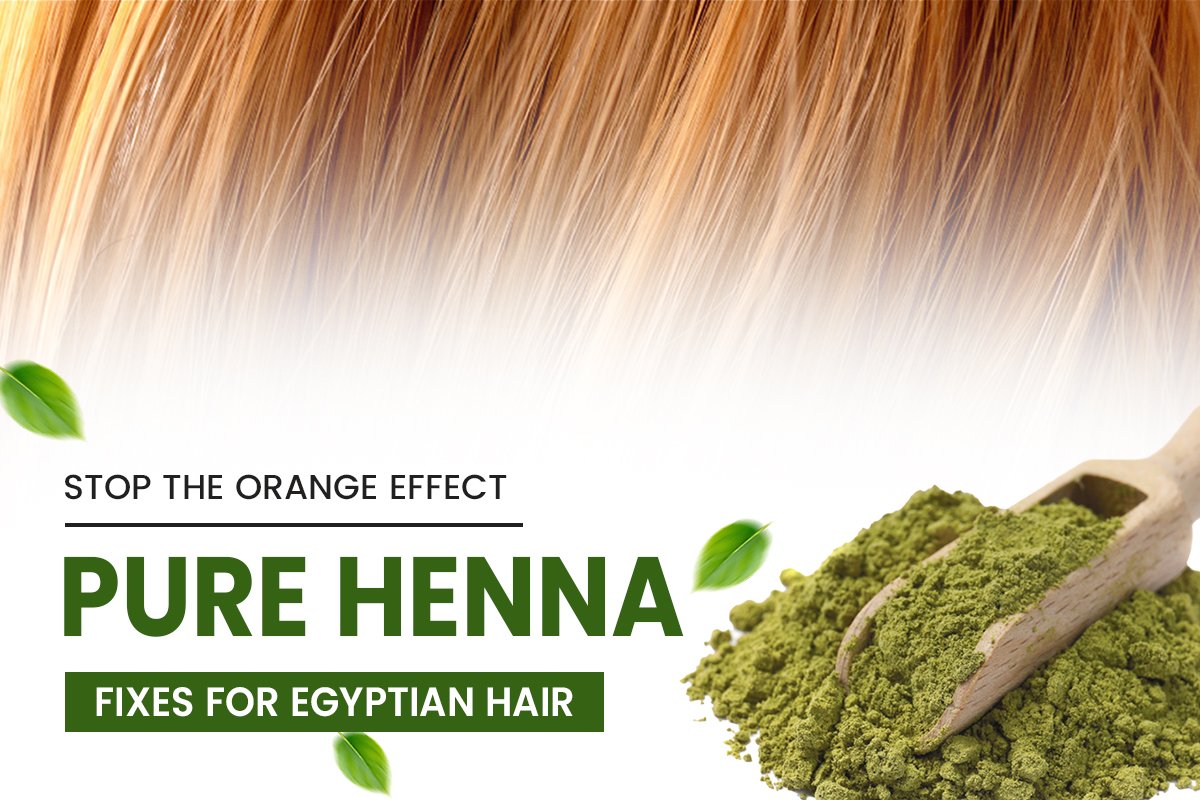
Stop the Orange Effect: Best Pure Henna Hair Fixes for Egyptian Hair
Nadia runs a mid-sized salon in Cairo. She has been doing hair for twelve years. Last spring, three clients in one week called her back — same complaint every time. Their henna hair had turned bright orange. Not auburn. Not reddish-brown. Flat, loud orange.
She had not changed her technique. She had not changed the application time. The only thing different was a new batch of product from a cheaper supplier. That switch cost her three rebooking clients and two bad reviews.
Nadia’s story is not unusual. Across Egypt, orange results after a natural henna treatment are one of the most searched hair problems online. And in almost every case, the cause traces back to the same place — the quality of the product, not the skill of the person applying it.
Why Egyptian Hair and Cheap Henna Are a Bad Match
Egyptian hair is built differently from most hair types you read about in international beauty guides. It is dense. The cuticle — the outer layer of each strand — sits tight and flat. Dark melanin runs deep through the cortex. When color is applied, it has to work harder to get past that protective barrier.
Henna color comes from a molecule called lawsone. It moves from the paste into the hair shaft and bonds with keratin protein there. On looser, lighter hair types, even a small amount of lawsone shows clear color. On Egyptian hair, you need real concentration and real penetration. If the lawsone percentage is low — anything under 2% — the molecules pile up on the outer cuticle instead. That layer looks orange under daylight.
Now add the bigger problem. Many products sold across Egyptian pharmacies and wholesale markets as hair dye are not pure henna at all. They contain metallic salts, starch fillers, synthetic dye bases, or PPD. Some have all four. These additives react with dark melanin in unpredictable ways. The orange you see is not henna. It is a chemical reaction between synthetic additives and your client’s natural hair pigment.
Read this piece on what hair dye brands rarely disclose for a closer look at how undisclosed ingredients end up in mass-market henna products.
What Pure Natural Henna Actually Does — and Does Not Do
Pure natural henna does not lighten hair. It does not lift melanin. What it does is add a warm pigment layer that bonds directly to keratin. On black or very dark brown hair — which most Egyptian hair is — that layer shows up as:
- A reddish shimmer in direct sunlight on the first application
- A warmer, deeper tone after two or three applications build up
- A rich brown to near-black result when indigo is added in a second step
None of these results look orange. When orange happens, lawsone did not penetrate. It sat on top. Either the product did not have enough lawsone to push through, or something in the formula blocked the bonding process.
Choosing high-quality organic henna powder with a verified lawsone content above 2.5% is the first decision that determines whether your result is rich or brassy.
Five Things That Fix the Orange Problem on Egyptian Hair
Fix 1 — Switch to Sojat-Origin Henna with a COA
Not all henna grows the same. The Lawsonia inermis plants that grow around Sojat City in Rajasthan, India, produce higher lawsone concentrations than plants from other regions. The dry, alkaline soil and specific climate push the plant to produce more of the dye compound. That is why professional formulators and serious salon buyers consistently ask for Sojat-origin henna by name.
Kirpal Export Overseas (KEO) sources, processes, and exports henna from Sojat. Their powder comes with a Certificate of Analysis per batch showing exact lawsone percentage. ISO, GMP, and HALAL certifications cover the manufacturing process. For a salon owner like Nadia, or a private-label brand building a product line, that documentation removes the guesswork from every order.
You can browse their verified henna manufacturing range and request samples before committing to bulk.
Fix 2 — Use Indigo for Brown and Black Results
Indigo powder — processed from Indigofera tinctoria — is the natural partner to henna on dark hair. Used in a two-step method, it shifts the warm henna tone toward cool brown and black. Step one: apply henna, leave 3–4 hours, rinse. Step two: apply fresh indigo paste, leave 1–2 hours, rinse again.
For Egyptian hair aiming for dark brown, a 1:1.5 henna-to-indigo ratio works well. For near-black, move to 1:2 or 1:3. KEO supplies both from the same certified facility — useful for bulk buyers who need consistent co-batches across production runs. Their henna and indigo supply details are at hennasupplier.com.
Fix 3 — Mix with Acid, Not Water
Mixing henna paste with plain water is one of the most common mistakes in professional applications. Water does not help lawsone release. An acidic liquid does.
Lemon juice, apple cider vinegar, or strong black tea creates a low-pH environment that triggers full dye release before the paste touches the hair. Mix the paste, cover, and rest it for eight to twelve hours before applying. Overnight resting gives the best results on resistant Egyptian hair.
This preparation step costs nothing extra. It moves results from patchy orange to deep, even color — just by changing the mixing liquid.
Fix 4 — Add Amla to Cool the Tone
Amla powder — dried Indian gooseberry — has been used in South Asian and Middle Eastern hair care for centuries. Its naturally acidic pH tones down the warmth of lawsone and pushes the final color result toward cooler brown instead of warm orange-brown.
Adding 10–15% amla by weight to a henna hair mix is a standard adjustment for dark, resistant hair types. For Egyptian hair with a strong orange pull, 20% amla is a reasonable upper limit — always patch test first, since amla also slightly darkens the overall result.
KEO supplies amla alongside its full botanical range. Brands developing herbal hair color lines can source henna, indigo, amla, brahmi, and other herbs from the same certified manufacturer without managing multiple vendors.
Fix 5 — Process Longer and Add Gentle Heat
Egyptian hair needs time. Three hours is a minimum. Four to six hours is standard for good penetration. Overnight — eight hours or more — is what professional salons across Cairo and the Gulf recommend for maximum depth on resistant hair.
A warm towel wrapped over a plastic cap adds gentle heat without direct exposure. A hooded dryer on a low setting works too. Heat slightly opens the cuticle and gives lawsone molecules a better path into the shaft. This alone can shift an orange result to warm brown without changing the formula.
What Happened When a Cairo Salon Switched Suppliers
Back to Nadia. After the three callbacks in one week, she tested four different henna suppliers over two months. She documented every application — hair type, processing time, result, client feedback.
The product she moved to permanently had a verified 2.9% lawsone content per batch COA and contained no metallic salts. The preparation method she now follows: acidic mix, ten-hour rest, four-hour application on first-time clients. Repeat clients with built-up color: three-hour application.
Her note from month two of testing: ‘The prep takes longer. But I stopped getting call-backs. The color is the same every time. Clients notice that.’ That consistency — batch after batch, client after client — is what separates certified natural henna from cheaper commercial blends.
For a wider look at what separates certified henna operations from commodity suppliers, henna-manufacturers.com has a useful supplier evaluation guide.
Buying Henna in Bulk for Egyptian and MENA Markets
For distributors, salon chains, and cosmetic brands sourcing for Egypt and broader MENA, these five questions should go to every potential supplier before placing a first order:
- Does each batch ship with a COA showing the actual lawsone percentage?
- Are the manufacturing facilities ISO, GMP, and HALAL certified?
- Can they supply multiple mesh sizes — 150, 200, or 300 mesh — for different formulation needs?
- Is indigo, amla, brahmi, or shikakai available from the same facility for multi-ingredient products?
- Can they provide export documentation for MENA, EU, and US regulatory requirements?
KEO meets all five. With 30+ years of export history, they work with private-label cosmetic brands, salon distributors, and Ayurvedic product manufacturers across Europe, the Middle East, and North America. Their position as one of the established hair color manufacturers in India gives international buyers a single sourcing point for botanical raw materials with traceable documentation.
US-based importers: many hair color manufacturers in USA buy raw henna from Indian exporters for their clean-beauty lines. Sourcing directly from a certified hair dye manufacturer in India removes intermediary costs and adds the batch-level traceability that clean-beauty retail buyers are now asking for. Full product and OEM details at herbalhaircolors.com.
Egypt Has Used Henna for 5,000 Years — The Problem Is Recent
Henna is not new to Egypt. Residue traces on mummified hair and nails date its use back over five millennia. It was used by royalty, by everyday families, and across religious and cultural ceremonies. The knowledge of how to use it properly was passed down through generations.
What changed in the 1990s and 2000s was the import of cheap synthetic hair color products, many labeled as “henna” to appeal to buyers who trusted the name. These products replaced traditional sourcing in markets, pharmacies, and wholesale channels. When consumers tried to return to genuine natural henna in recent years, many were unknowingly buying the same synthetic-blend products under a different marketing label.
Since 2020, demand for verified chemical-free henna in Egypt and the Gulf has grown measurably. That shift is part of a wider movement visible in global natural hair color trend data — consumers reading labels, salons rethinking their supply chains, and brands building around transparent ingredient sourcing.
Fix the Orange — Fix the Source
Orange results from henna hair on Egyptian hair are not random. They have a consistent cause — low lawsone content, adulterants, or both — and they have consistent fixes.
Pure, high-lawsone natural henna from a verified Sojat-origin source, prepared with an acidic mix, rested overnight, combined with indigo or amla for tone control, and processed for adequate time on resistant hair — this is not a complicated formula. It is just the correct one.
For Nadia and for every professional handling Egyptian hair, the decision that matters most happens before the client sits down. It happens when you choose your supplier.
KEO’s certified henna range is at kirpalexport.com. Formulation guides and export articles are on the KEO blog. The full herbal hair color range covers everything from raw powder to finished OEM formulations.
Frequently Asked Questions
Q1. Why does henna turn orange on Egyptian hair but not on lighter hair types?
Egyptian hair has a tightly packed cuticle and high melanin density. Low-lawsone henna paste bonds to the outer cuticle surface rather than penetrating into the cortex. That surface layer reads as orange in daylight. Lighter or more porous hair absorbs more lawsone per application, so the result is deeper rather than brassy. Using a higher-lawsone product, an acidic mixing liquid, and a longer processing time solves this on Egyptian hair.
Q2. Is it possible to get dark brown or black from natural henna on Egyptian hair?
Yes. A two-step process using henna followed by indigo powder achieves brown to black results. Apply henna first, rinse fully, then apply fresh indigo paste. The ratio of indigo to henna controls the final shade — more indigo gives a darker, cooler result. Many certified manufacturers offer pre-measured brown and black ratio blends for professional use.
Q3. How do I verify that a henna product has no metallic salts or PPD?
Ask for a Certificate of Analysis (COA) for each batch. This document lists the ingredient composition and any contaminants. A verified manufacturer sends this automatically or on first request. If a supplier hesitates or cannot provide one, do not use the product for professional applications.
Q4. What certifications matter most when sourcing bulk henna for Egyptian or MENA markets?
ISO 9001, GMP, and HALAL are the three primary certifications to look for. For brands exporting into EU markets, also ask about compliance with EU Cosmetics Regulation 1223/2009. KEO holds all three primary certifications and exports regularly to MENA, European, and North American buyers.
Q5. How much amla should I add to a henna mix to reduce orange results?
Start with 10–15% amla by weight in the henna mix. For very resistant Egyptian hair, 20% is a workable upper limit. Amla slightly darkens the overall result as well as cooling the tone, so always do a strand test before a full application.
Q6. Do hair color manufacturers in the USA source their henna from India?
Most do. Hair dye manufacturers in USA producing natural and clean-beauty lines import raw henna and indigo from certified Indian exporters rather than from domestic processing. Buying directly from the source manufacturer — rather than through US-based intermediaries — gives better batch documentation, traceability, and usually lower raw material cost per kilogram.