
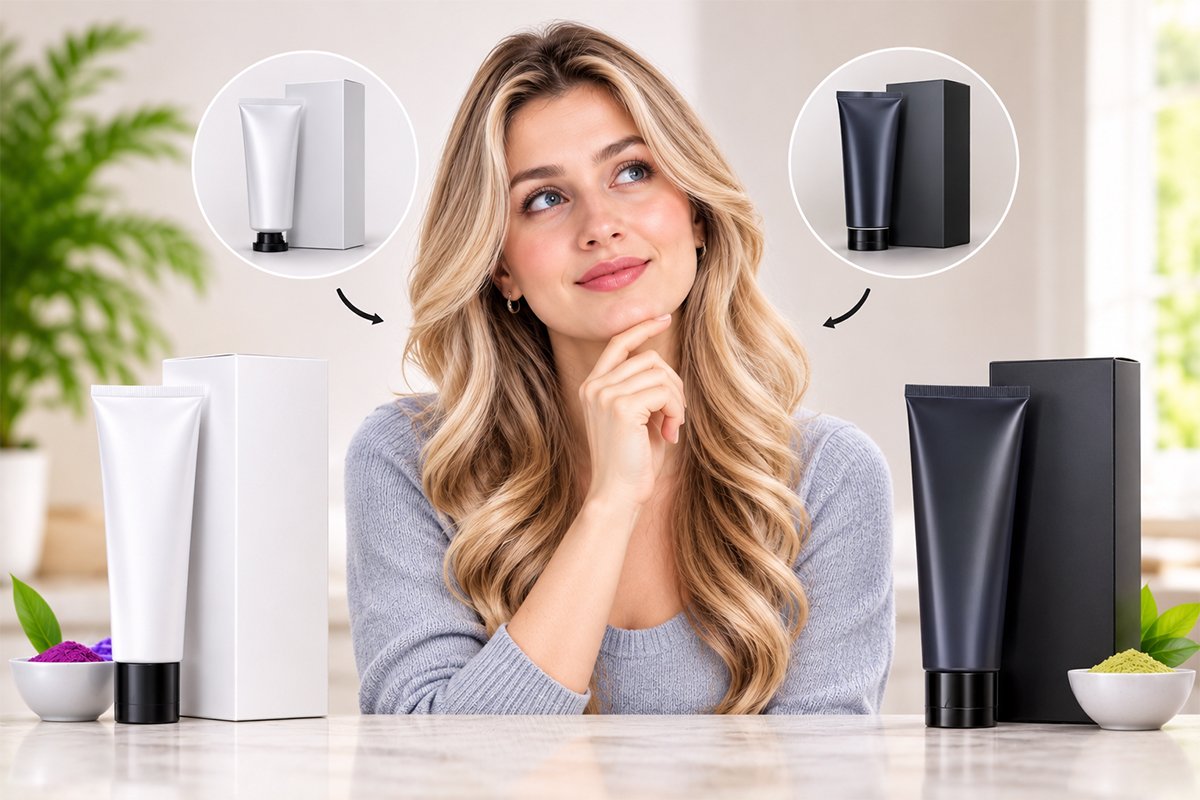
Why does a leaf powder that the FDA listed back in 1965 still decide who gets the phone call when a hair color goes wrong in 2026? The leaf is henna. FDA’s summary of color additives dates its listing to 1965, and the rule behind it, 21 CFR 73.2190, allows henna for coloring hair only. Eyelashes, eyebrows and the area around the eye are off limits. For decades, that sat in formulators’ footnotes and almost nowhere else.
Then the Modernization of Cosmetics Regulation Act (MoCRA) became law in December 2022, and the footnote moved to the front of the line. The manufacturer, packer or distributor named on the label now carries product listing, safety records and serious adverse-event reporting. The factory registers its own facility, and the first two-year renewals of those registrations started coming due in 2026. So the real gap between white label and private label is not the box. It is who owns the formula and who answers to the FDA.
Private label hair color manufacturing means a factory produces a product to your brief, with agreed customization, and it ships under your brand. White label means you rebrand a finished product the factory already sells. Hair color contract manufacturing is the production arrangement underneath either one. Because suppliers use these terms loosely, the definitions that matter are the ones written into your contract.
What Is Private Label Hair Color Manufacturing?
Private label hair color manufacturing means a manufacturer produces hair color to an agreed specification, and the buyer sells it under its own brand name. In simple terms, the factory does the chemistry and the filling, and you do the brand. A private label hair color manufacturer will usually let you adjust the shade, the pack format and the label, while the base formula comes from its own range or from a recipe built with you.
What you can change is the real question. Common levers include shade, ingredient blend, pack size, pouch or box design, instructions and the claims you make. What you usually cannot change quickly is the plant material itself, because henna, indigo and other herbs are agricultural products. A good partner says so up front and explains how shade is controlled between batches.
Brands that want to see how this works in practice can look at one example of private-label hair color manufacturing services, which covers formulation help, shade range and pack options for herbal products. It is a supplier page, not a verdict, so read it the way you would read any supplier page: with a pen and a list of questions.
Note that hair dye private label manufacturing is rarely one decision. It is a bundle of three: the formula, the packaging and the paperwork. Brands that treat it as one decision tend to discover the other two late, usually right before launch.
What Is White Label Hair Color Manufacturing?
White label hair color manufacturing means you buy a finished product that the factory already makes and put your brand on it. In simple terms, the recipe is not yours, and it may not be exclusive to you. A white label hair color manufacturer may sell the same shade or kit to several brands, each with a different logo on the pack.
The appeal is speed. There is no formula development, so a brand can reach the shelf sooner than with a custom project. The trade-off is sameness. If two brands buy the same herbal brown, the label is the only thing that separates them, and shoppers eventually compare ingredient lists. White label hair dye manufacturing works best for testing a market before investing in something more distinctive.
How to Choose a White Label Hair Color Manufacturer
Before signing, put these questions to any white label hair color manufacturer and ask for the answers in writing:
- Is the formula exclusive to us, in which territory or channel, and for how long?
- Can the supplier change the formula without telling us?
- Who holds the ingredient declaration and safety data for the finished product?
- Will we be told if the same formula becomes the subject of a complaint or recall under another brand?
- Can we move to private label later without changing the shade?
Private Label vs. White Label vs. Contract Manufacturing
Here is the comparison most buyers want on one screen. The columns describe common arrangements, not guarantees, because suppliers define these terms differently.
| Question | White label | Private label | Contract manufacturing |
| Whose formula? | The supplier’s existing product | The supplier’s base, adapted to your brief | Yours, or built to your specification |
| Customization | Mostly branding and packaging | Shade, blend, pack and label within agreed limits | Wide, defined by the project |
| Exclusivity | Rarely exclusive unless agreed | Can be exclusive if the contract says so | Set by the contract |
| Speed to market | Usually fastest | Moderate | Usually slowest |
| MoCRA responsible person | Whoever is named on the label | Whoever is named on the label | Whoever is named on the label |
| Main risk | Sameness with other brands | Vague definitions of “customization” | Who owns the formula if you leave |
Hair Color Contract Manufacturing in Plain Words
Hair color contract manufacturing means a manufacturer produces a product according to a specification, formula or project agreement that the buyer supplies or approves. Searches for a contract manufacturer hair coloring partner usually come from brands that already hold a formula or a firm shade brief. The agreement then covers who owns the recipe, how batches are approved and what happens if either side exits.
Where OEM and ODM Fit
Two more acronyms turn up in quotes. OEM hair color manufacturing means the factory makes the product to your design. ODM, or original design manufacturing, means the factory designs the product and you brand it. In practice, OEM leans toward contract work, and ODM overlaps with white label and private label. Usage varies, so ask the supplier to describe what it means by either term in a sentence of its own.
Why US Beauty Brands Choose Herbal Hair Color Products
Natural color is not a new idea. Henna and indigo have colored hair for centuries, and a henna and indigo hair color routine is still how many people move from red-brown to dark brown or black without a salon chair. Henna gives warm reddish tones. Indigo, sold as natural indigo powder for hair coloring, cools and deepens them. Blend the two in different ratios and the palette runs from copper to near black.
For a brand, that palette becomes a product line. A plant-based hair dye manufacturer can offer henna, indigo and herb blends that read differently from ammonia-based color on a shelf. Retail context helps here, though only a little. Trade coverage of Ulta’s second-quarter fiscal 2026 results reported hair care rising from 19 percent to 20 percent of its sales year over year. That is a hair care figure, not a hair color or wholesale one, so treat it as context, not proof.
Range width matters more than most brands expect. One herbal catalogue, shown on this page about a herbal and plant-based hair color range, lists nineteen products, from soft black and dark brown to wine red, burgundy and vanilla blonde, plus natural henna, neutral henna and indigo. Count what a supplier can actually deliver before designing a line around shades it cannot.
Plant-based does not mean problem-free. A herbal hair color manufacturer should tell buyers about the limits: henna and indigo deposit color, they do not lighten, and results depend on the starting hair. Plant allergies exist too, so instructions should still recommend a patch test. Claims such as “chemical-free” or “ammonia-free” need an ingredient declaration behind them. Some suppliers state that their herbal blends contain no ammonia, PPD or peroxide. Verify that on paper, not on a sales page.
Sourcing the base powder is the other half of the job. A bulk hair color powder supplier should be able to say which leaf grade and which batch a powder came from. To see how a supplier presents a single powder, open this page from a bulk natural henna powder supplier and compare it with the specification sheets you receive elsewhere.
What to Look for in a Hair Color Manufacturing Partner
These are the checks that matter in private label hair color manufacturing when you are deciding between white label, private label and contract work. Think of it as paperwork first, promises second.
- Define the model in writing. Spell out what is customized, what is exclusive and who owns the formula.
- Ask for the specification and a Certificate of Analysis. Product specifications and quality testing results should exist on paper for the first batch, not only in conversation.
- Check batch consistency. Natural raw materials vary by harvest, so ask how shade is matched from one batch to the next and what tolerance is acceptable.
- Request the ingredient declaration for the finished product. Your label’s ingredient list depends on it.
- Read the certificates, not the badge. ISO 22716 is the standard written for cosmetics manufacturing, so “ISO certified” alone does not say what was audited. Ask for the certificate, its scope and its expiry date.
- Confirm FDA facility registration and the US agent. A foreign facility that must register has to name one.
- Order a sample and test it on your own hair swatches. A shade chart is a promise. A swatch is evidence.
A separate guide on choosing the right private-label hair color manufacturer covers the selection process itself, so this checklist focuses on the model decision instead of repeating it.
Custom Formulations, Shades and Packaging Options
Custom herbal hair color formulation is where private label becomes more than a rebrand. A typical path runs from a shade brief to swatch tests, a trial batch, written approval and a locked reference sample. That last step is the one people skip. Without an approved reference, “the same shade” turns into an argument six months later.
Custom hair color shade development with plant powders can mean adjusting the henna-to-indigo ratio, adding herbs for tone or changing how fine the powder is milled, and each change needs a new test round. The dark end of the palette is governed largely by the indigo share, so settle that ratio before briefing a supplier on browns and blacks.
Private-Label Hair Color Packaging
Private-label hair color packaging decides what a shopper sees first. The packing options page for custom hair color packaging and private-label packaging lists metallic pouches in 100 g, 500 g and 1 kg sizes, bulk bags of 20 kg and 25 kg, 5 g and 10 g sachets, paper boxes, mono cartons, glass bottles and custom-printed outer boxes. A powder pack also has to keep out moisture, air and light, so ask what barrier layers sit behind the print.
Before artwork is final, check it against the label rules in the compliance section below. A beautiful box that omits the US contact for adverse events is a reprint, and reprints are rarely cheap.
Understanding MOQ, Bulk Orders and Production Requirements
Hair color manufacturing MOQ, short for minimum order quantity, is the smallest production run a supplier will accept. The trap is units. Powder makers often quote in kilograms per color, while cream and liquid makers quote in tubes or bottles. Convert every quote into finished units per shade before comparing.
A simple example shows why. Suppose a supplier sets a minimum of 50 kg per color. Packed in 100 g pouches, that is 500 pouches. Packed in 500 g pouches, it is 100 pouches. The figure is hypothetical, but the arithmetic is not. Four colors at that minimum means 200 kg in total, so check cash flow and storage space, not just the unit price.
Ask about the minimums hiding behind the headline number. Printed boxes, labels and custom pouches can carry their own minimum runs, a new shade may carry a development charge, and a sample is not the same as a production batch. Also ask about lead times, what happens to leftover packaging if you change a claim, and how a reorder is priced.
FDA and US Cosmetic Compliance Considerations
This section is general information for planning, not legal advice. Rules change, so confirm each point with a US regulatory adviser and the FDA’s own pages before you commit.
Who Is the Responsible Person?
Under MoCRA, the responsible person is the manufacturer, packer or distributor whose name appears on the label. That person handles product listing, safety substantiation and serious adverse-event reporting. A contract manufacturer does not absorb these duties simply because it makes the product, and a foreign factory’s US agent is a different role. The agent handles FDA communication for the facility. So in private label hair color manufacturing, the name on the label is a legal decision, not only a design one.
Registration, Listing and Renewal
Facilities that manufacture or process cosmetics for the US market must register with the FDA, and foreign facilities must name a US agent. Registration renews every two years, counted from the date the FDA received the initial registration. The FDA’s own example is a facility registered on February 20, 2024, whose renewal fell due on February 20, 2026. Product listing is a separate task for the responsible person, and listings are updated annually. Ask any overseas manufacturer for its current registration details instead of assuming.
Small businesses with average gross annual US cosmetic sales under $1 million, adjusted for inflation, can be exempt from registration and listing. The exemption excludes certain products, including those intended to alter appearance for more than 24 hours, and some industry guides place hair dye in that group. Do not assume an exemption applies to a hair color line without checking. Industry guides also note that no exemption covers serious adverse-event reporting.
Adverse Events, Safety Records and Labels
A serious adverse event must be reported to the FDA within 15 business days of the responsible person receiving it, and safety records must be kept. The label must also carry a domestic address, phone number or electronic contact for adverse-event reports, alongside the usual ingredient declaration, net quantity and name and place of business. Keep the FDA’s cosmetic labeling requirements open while your artwork is drafted.
Color Additives and the “FDA Approved” Trap
Color additives are the one area where FDA approval is the rule. Except for coal-tar hair dyes, they must be approved for their intended use. Henna has its own listing, limited to hair, and the regulation asks for two label statements or their equivalent: “Do not use in the area of the eye” and “Do not use on cut or abraded scalp.” Because the listing excludes eyelashes, eyebrows and the eye area, a henna hair color should not be stretched into a brow tint without separate regulatory advice.
Do not assume the henna listing covers every other plant colorant in a blend. Ask a US regulatory adviser how each ingredient is treated. And never call a product “FDA approved” because its factory is registered or certified. Registration is not approval, and cosmetic products themselves do not need FDA premarket approval.
What Is Still Pending?
Two MoCRA rulemakings were still unfinished as of October 2026: fragrance-allergen labeling and cosmetic good manufacturing practice (GMP) regulations. Industry trackers reported that no proposed fragrance-allergen rule had been published, and FDA’s regulatory agenda listed GMPs as a long-term action. If your products contain no fragrance, the allergen rule matters less. Some compliance guides suggest following ISO 22716 while waiting for a GMP rule. Check the FDA’s MoCRA page for the latest status.
Why Consider an Indian Herbal Hair Color Manufacturer?
Henna and indigo are crops, and India grows and processes both. A manufacturer based in India that supplies international buyers can work close to the raw material and offer pack formats built for export. Keep the logistics honest, though: the factory is overseas, so shipping time, customs entry and a US-based responsible person all need a plan from day one. A search for hair color manufacturers in USA will turn up domestic labs and filling houses, and an overseas factory is a different route with different trade-offs.
A page like this one for a natural hair color supplier for US businesses is a reasonable starting point. Then judge any supplier, in India or elsewhere, by the checklist above: written definitions, batch records, registration details and a sample you tested yourself.
Imported cosmetics must meet the same US requirements as domestic ones. Export paperwork such as commercial invoices, packing lists and Certificates of Analysis should travel with each batch, so agree early who prepares which document.
Frequently Asked Questions
Q: What is the difference between private label and white label hair color?
A: With white label hair color, you rebrand a finished product the factory already sells, so the formula is the supplier’s and may not be exclusive. With private label, the product is made to your brief with agreed customization, so shade, blend and packaging can be yours. Terms vary, so confirm the definitions in writing.
Q: Is hair color contract manufacturing the same as private label?
A: Not exactly. Hair color contract manufacturing produces to a specification or formula the buyer supplies or approves, while private label usually starts from the manufacturer’s own base. Many suppliers blur the two, so ask who owns the formula and what you may take elsewhere.
Q: Who is the responsible person if my manufacturer is overseas?
A: It is the manufacturer, packer or distributor named on the label. If your brand appears as the distributor, product listing, safety substantiation and serious adverse-event reporting fall to you, not to the factory or its US agent. Confirm your own situation with a US regulatory adviser.
Q: Does my manufacturer’s FDA registration make my product FDA approved?
A: No. Registration tells the FDA that a facility exists. Cosmetic products do not receive FDA approval, with color additives as the exception, so avoid “FDA approved” on packaging and in ads.
Q: Can I sell a henna-based eyebrow tint using the same approach?
A: Treat it as a separate regulatory question. The FDA listing for henna covers coloring hair only and excludes eyelashes, eyebrows and the eye area, so a brow product needs its own review before launch.
Q: How do I compare a minimum order in kilograms with one in units?
A: Convert both to finished units per shade. A hypothetical 50 kg minimum equals 500 pouches of 100 g or 100 pouches of 500 g. Include any separate minimums for printed boxes and labels when you compare hair color manufacturing MOQ figures.
Q: How long does custom shade development take?
A: It depends on how many trial rounds your brief needs, so no honest universal number exists. Ask the supplier to describe its sampling steps, how many trial batches are included and how an approved shade is locked as a reference.
Q: Are plant-based hair dyes free of allergy risk?
A: No. Plants can cause reactions too, so include patch-test instructions and an ingredient declaration. Be careful with claims like “chemical-free” unless the ingredient list supports them.
The Bottom Line on Private Label vs. White Label
White label is fast and familiar, private label hair color manufacturing is customizable, and contract manufacturing gives the most control and the most responsibility. None of them removes your duties as the name on the label. The best choice is the model whose definitions you can write down in plain sentences, and whose supplier answers your paperwork questions without hesitation.
Your next step is practical. Write your own definitions of the three models, request a sample and a Certificate of Analysis, ask for registration details, and settle the label-name decision with a regulatory adviser before artwork is printed. If a private label hair color manufacturer hesitates on any of those, that hesitation is information too.