
What did scientists find when they examined a 3,200-year-old pharaoh’s hair in Paris in 1976? The mummy of Ramesses II had flown there for conservation, passport and all, and part of the study focused on the strands still clinging to his scalp. The analysis pointed to a reddish dye, most likely henna, laid over hair that had once been naturally red. Whether he used it in old age or the embalmers applied it later is still debated.
Either way, a plant paste left a colour that researchers could still detect thousands of years later. That staying power is the clue to everything henna does for hair today, and also to where the marketing sometimes runs ahead of the science. So what are the real benefits, and what should henna-based hair color manufacturers say about them honestly?
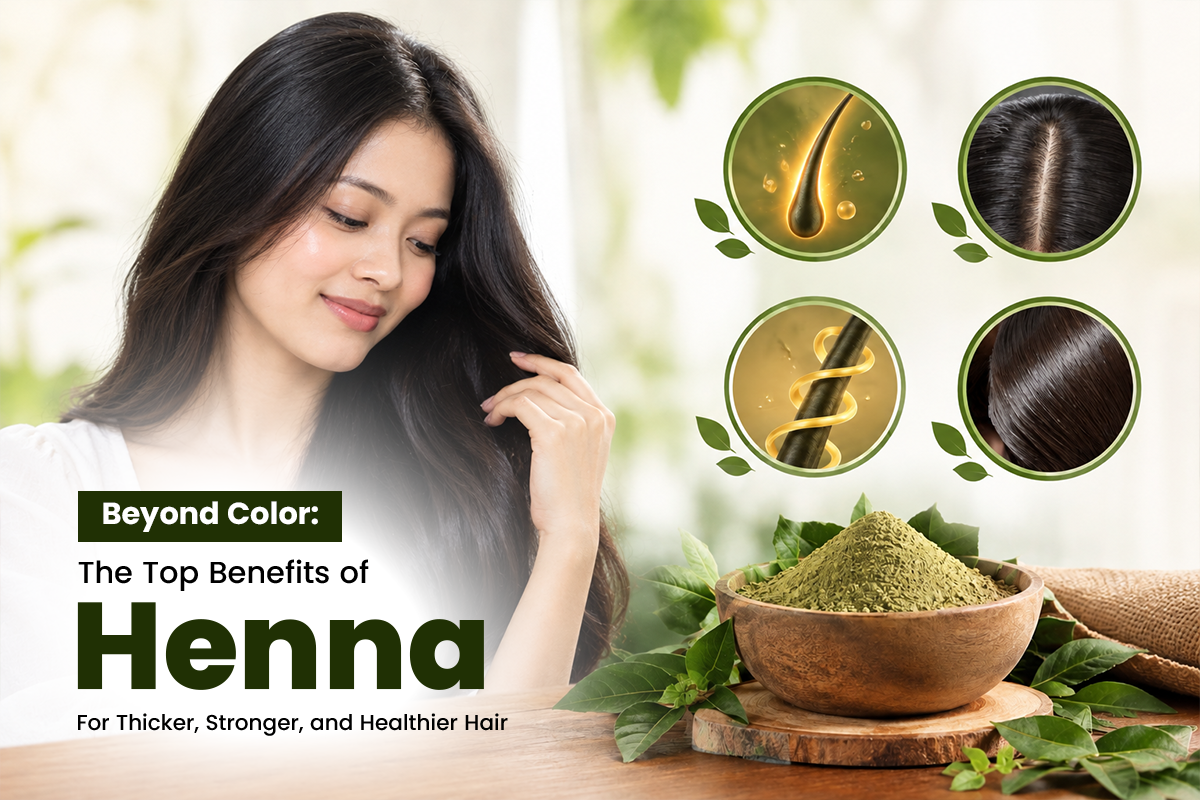
The main benefits of henna come from lawsone, the red-orange pigment in the leaf of Lawsonia inermis. Lawsone binds to keratin, the protein hair is made of, so it colours the strand, coats its surface and can make hair look thicker, glossier and smoother. Evidence that henna truly strengthens hair or speeds up growth is limited, so the honest promise is colour, shine, body and a more comfortable scalp.
What Is Henna, and How Does It Work on Hair?
Henna is a powder made from the dried, ground leaves of Lawsonia inermis. In simple terms, it is a plant dye that stains hair rather than bleaching it open. The key ingredient is lawsone, also called 2-hydroxy-1,4-naphthoquinone, which laboratory tests of henna powder typically find at roughly 0.5% to 3%.
Lawsone is a small molecule with a natural pull toward keratin. Mixed with water, ideally with a mildly acidic liquid, the paste releases its dye, and the dye moves into the outer layer of the hair and binds there. Lab work on keratin fibres also suggests a slow follow-up reaction that makes the bond harder to wash out, which is why henna colour fades gradually instead of vanishing in two shampoos.
Conventional permanent dyes take a different route. They generally rely on alkaline agents and oxidation to push colour into the strand. Henna works mostly from the surface and outer layer inwards, and that one difference explains most of its benefits and most of its limits.
Does Henna Make Hair Thicker?
In appearance, yes, and that is not a cheat. Each strand picks up a thin layer of pigment and plant matter on and in its outer cuticle. That coating fills rough, porous patches and adds a little diameter, so fine hair often feels fuller and holds a style better. Think of a bare wooden fence versus the same fence with a fresh coat of paint: the same fence, but smoother and sturdier-looking.
What henna does not do is change the number of follicles or thicken hair at the root. Here, “thicker” means body and volume in the strand you can see and feel. That distinction matters for anyone writing product claims, and we return to it in the brand section below.
Does Henna Make Hair Stronger? What the Evidence Really Says
This is the part most blog posts skip. Reviews of the evidence describe a modest scientific basis: lawsone binds to keratin and coats the shaft, which may increase the perception of thickness and shine, but direct proof that henna improves tensile strength or promotes growth is limited. Some cosmetic chemists argue that no controlled technical data credits henna with strengthening hair. Many regular users, meanwhile, report less snapping when they comb.
Both camps can be right. A coated strand may feel and behave more resilient even if its internal structure is unchanged. The table below separates what the evidence supports from what it does not.
| Common claim | What the evidence supports | A safer way to say it |
| Thicker hair | Surface coating can make strands look and feel fuller | “Adds body and fullness” |
| Stronger hair | Limited direct evidence; many user reports of less breakage | “Many users find hair feels more resilient.” |
| Faster growth | No solid clinical evidence | Leave it out |
| Shine and smoothness | A smoother cuticle surface is widely observed. | “Adds natural-looking gloss” |
| Dandruff relief | Lab studies only; clinical proof is weak. | “Traditionally used for scalp care” |
| Chemical-free colour | Pure henna is plant-based, but “black henna” may not be pure. | “Check the ingredient list.” |
Benefits Beyond Color: Shine, Scalp Comfort and Gentler Coloring
Shine and smoothness. A cuticle that lies flatter reflects light better, and henna’s coating nudges it that way. This is the benefit people often notice first, sometimes after a single application.
Scalp comfort. Henna has a long traditional role in scalp care. In one laboratory study published in 2010, henna leaf extracts stopped the growth of Malassezia, the yeast linked to dandruff, in a test tube. The authors were clear that the work did not measure clinical results. So treat henna as a gentle traditional extra, not a replacement for a medicated shampoo.
Gentler coloring. Pure henna contains no ammonia or peroxide, so you skip those exposures. It also tints grey hair gradually, which many people prefer to a sharp regrowth line. Henna is the tortoise of hair colour: slower, steadier and oddly satisfying.
Which Shade Will You Get From Henna?
Natural henna produces shades in the red, orange and brown range, depending on your starting colour and how you apply it. On brown hair it often drifts toward warm tones, and if you are curious about that direction, this overview of auburn hair color is a good place to start.
For deeper browns and darker results, henna is commonly layered or blended with indigo. If you want to understand that pairing, read more about indigo powder for hair before you mix anything. And remember the basic rule of plant dyes: they add colour, they do not lift it.
Patch tests and strand tests are worth the extra ten minutes here, because the final shade depends on your starting colour, how long the paste stays on and how porous your hair is. Two people using the same powder can walk away with noticeably different results, which is normal rather than a sign that something went wrong.
How to Use Henna for Healthier-Looking Hair
- Patch test first. Try a small amount on a patch of skin and follow the product’s instructions before covering your whole head.
- Choose a pure powder. Read the ingredient list and avoid anything vague. A finely milled, triple-sifted organic henna powder generally mixes more smoothly, which makes application less messy.
- Start with clean hair. Mild cleansers such as shikakai powder have long been used in Indian hair care, and multani mitti is a clay traditionally used in scalp masks.
- Mix and rest. Combine the powder with warm water and a mildly acidic liquid such as diluted lemon juice, then let the paste rest as the instructions suggest so the dye releases.
- Apply, wait and rinse. Cover every strand, keep the paste moist, and rinse thoroughly. Leaving it on for a few hours is common.
- Condition afterwards. A little oil or conditioner helps if your hair feels dry.
Who Should Be Careful With Henna?
Henna is gentle for most adults, but a few cases need care:
- G6PD deficiency. In people with this common inherited enzyme condition, henna has been linked to a dangerous breakdown of red blood cells, mostly in infants and young children. G6PD deficiency affects hundreds of millions of people worldwide, so doctors advise avoiding henna on infants until their G6PD status is known.
- “Black henna.” Pure henna is never truly black. Products sold under that name may contain PPD, a strong allergen, so check labels and patch test.
- Dryness. Some users find their hair feels stiff or dry after henna. Conditioning afterwards usually helps.
- Future colour changes. Henna binds firmly, and stylists often warn that bleach or chemical colour over henna can give unpredictable results. If lighter hair is your goal, this guide on how to turn grey hair blonde naturally covers that route.
- Swallowing it. Henna is for hair, not the plate. If you are curious, here is a short explainer on whether henna leaves are edible.
This article is educational and is not medical advice. If you have a medical condition or a history of reactions, check with a doctor first.
Henna Myths Worth Retiring
Myth 1: Henna repairs damaged hair. Henna can coat and smooth a damaged strand, which makes it look and feel better, but a coating is not a repair. Split ends still need a trim.
Myth 2: All henna is the same. Quality varies with the leaf, the milling and the sifting. A coarse powder can mix lumpyly and leave residue, while a fine, evenly sifted one spreads cleanly. Blends sold as “henna” can also contain other ingredients, which is why the label matters more than the name.
Myth 3: Henna is automatically safe for everyone. Natural does not mean risk-free. Allergies, G6PD deficiency and adulterated “black henna” are real exceptions, covered above.
Myth 4: Henna works instantly on grey. Pure henna builds colour with repeated use, and grey strands tend to take it a little differently from pigmented ones. Patience, and sometimes an indigo step, gets the best result.
How Does Henna Compare With Other Ways to Colour Hair?
Comparing methods, rather than brands, shows where henna fits.
| Method | How it colours | Main trade-off |
| Pure henna | Stains keratin from the surface inwards. | Limited shade range; cannot lighten hair |
| Henna with indigo | Layers of red-orange and blue pigments | Takes more steps; the result depends on timing |
| Oxidative permanent dye | Alkaline, oxidative reaction inside the strand | Wider shades and lift, but stronger chemistry |
| Direct (semi-permanent) dye | Deposits colour with little or no oxidation | Fades faster; formulas vary widely |
The trade-off for henna is range. You will not get platinum or a neon shade, but you do get a plant-based route to warm, natural-looking colour with a conditioned feel. That niche is exactly why henna-based hair color manufacturers keep seeing steady interest from salons and brands.
What Should Brands Ask Henna-Based Hair Color Manufacturers About Hair Benefits?
If you are a salon owner, distributor or beauty brand, the benefits table above is your claims guardrail. “Thicker” and “stronger” are the words that cause trouble, because they sound like medical or structural promises. The best henna-based hair color manufacturers help you write wording that matches what the product actually does and back it with paperwork.
Henna Manufacturers in India and Henna Suppliers: What to Request
Rajasthan’s Sojat region is one of India’s established henna-growing areas, so it is worth asking henna manufacturers in India exactly where their leaf was grown. When you compare henna suppliers, ask for a Certificate of Analysis, heavy metal and microbiological test reports, a specification sheet and a full ingredient declaration. As one example of an Indian source, you can look at this site on henna manufacturers in India, and the main site for henna suppliers lists a wider product range. To judge any partner, a guide to a reliable hair color manufacturer is a handy checklist.
Henna Powder Manufacturers and Henna Powder Suppliers: Spec Questions
Henna powder manufacturers should tell you the intended grade (hair colour or body art), how finely the powder is milled and sifted, and whether blends contain anything besides henna. Ask whether lawsone content is tested, since it drives colour strength. Reliable henna powder suppliers will also state the destination markets they document for. If you buy for North America, this page on a natural henna powder supplier in the USA shows what that conversation can look like.
Hair Color Wholesale, Henna Powder Wholesale and Hair Dye Suppliers
For hair color wholesale and henna powder wholesale, the practical questions are packaging and branding. Retail pouches from 100 g to 1 kg and bulk packs of around 20 to 25 kg are common formats, and you can compare packing styles before you commit. If you want your own label, learn how private label hair color manufacturers typically work with brands. Buyers adding a blue-black option can also review the indigo powder wholesale supply.
Finally, when you compare hair dye suppliers and general hair color manufacturers, ask who supplies the plant material and who tests each batch. Claims are only as good as the paperwork behind them.
Frequently Asked Questions About Henna and Hair Health
Q: Does henna make hair thicker?
A: It can make each strand look and feel fuller by coating the cuticle, so hair has more body. It does not increase the number of follicles or change hair at the root.
Q: Does henna make hair grow faster?
A: There is no solid clinical evidence that henna speeds up growth. Healthy-looking hair may simply break less, which can make length easier to keep.
Q: Is henna good for dandruff?
A: Henna is traditionally used for scalp care, and lab studies show leaf extracts can inhibit the dandruff-linked yeast Malassezia. Clinical proof is weak, so see a doctor for persistent dandruff.
Q: Can henna cover grey hair?
A: Yes, gradually. Pure henna usually tints grey strands a warm orange-red, and blending with indigo moves the result toward browns.
Q: Can I use chemical dye after henna?
A: It is possible, but results can be unpredictable because henna binds firmly. Do a strand test and ask a stylist before bleaching or colouring over henna.
Q: Who should avoid henna?
A: People with G6PD deficiency should avoid it, and it should not be used on infants until their G6PD status is known. Anyone who reacts to hair dye should patch test and avoid “black henna.”
Q: What should a buyer ask a henna powder supplier before ordering?
A: Ask for the ingredient declaration, a Certificate of Analysis, heavy metal and microbiological reports, the intended grade and the packing options for your market.
Q: Is pure henna the same as “black henna”?
A: No. Pure henna gives red, orange and brown tones. Products called “black henna” may contain other dyes, including PPD, so always read the label.
The Bottom Line on Henna for Healthier Hair
Henna delivers real, visible benefits: natural-looking colour, a glossy finish, extra body and a traditional scalp-care ritual. What it does not offer is proven structural repair or faster growth, and good henna-based hair color manufacturers will not claim otherwise. Use pure powder, patch test, condition afterwards and keep your expectations honest.
If you are comparing sources or planning a product line, your next step could simply be to read the guides linked above and gather the documents suppliers can show you. Whether you buy from henna manufacturers, small-batch makers or larger henna-based hair color manufacturers, a little curiosity now saves a lot of rinsing later.