
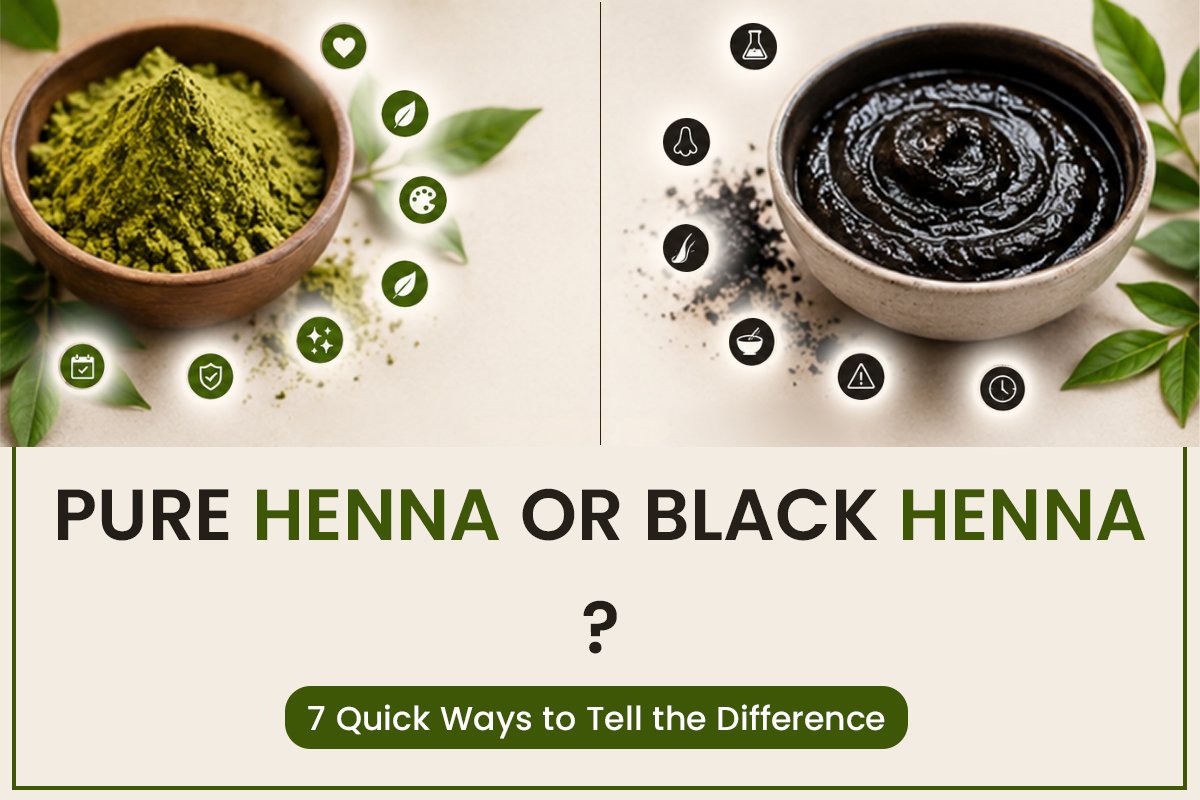
Pure Henna or Black Henna? 7 Quick Ways to Tell the Difference
Walk into any market in Sana’a, Taiz, or Aden and you’ll see rows of henna products. Some are legit. Some are not. And the scary part? They often look exactly the same on the outside.
Yemen has been using natural henna for centuries — for weddings, festivals, hair care, and skin art. But lately, a lot of what gets sold as “henna” is actually black henna — a chemical-heavy mix that has nothing to do with the real plant. Knowing the difference isn’t just about beauty. It’s about not ending up with burns, scars, or a bad allergic reaction on your face or scalp.
Here are 7 honest, practical ways to check before you buy or apply. These work whether you’re shopping for henna hair color, body art paste, or products for your salon.
First — What Even Is Pure Henna?
Real henna comes from one plant: Lawsonia inermis. The leaves get dried and ground into a fine powder. That’s it. No additives, no dyes, no shortcuts. The best quality comes out of Sojat, a small town in Rajasthan, India. Serious henna powder manufacturers source directly from there.
Pure henna stains your skin orange-red. Not black. Never jet black. It takes 24 to 48 hours to fully develop. If someone’s selling you something that goes black in 20 minutes and calls it “henna” — that’s your first warning sign.
And What Is Black Henna?
Black henna is a nickname for a mix of henna powder and synthetic chemicals — usually PPD (para-phenylenediamine). PPD is the same chemical used in permanent hair dye. Some products also contain coal tar, hydrogen peroxide, or ammonia.
Why do sellers use it? Because it’s cheap, it works fast, and it gives that deep black color people sometimes want. But PPD causes serious skin reactions. Blistering. Swelling. Chemical burns. In some cases, permanent scarring. The EU limits PPD in hair dyes to 2%. Many of these black henna products go way past that.
And yes, it gets sold as black henna hair dye too — not just for skin. Same risks apply to your scalp.
7 Ways to Spot the Real Thing
1. Look at the Powder Color
Scoop out a pinch of the powder. Pure henna looks olive green to brownish-green. Think dried herbs. If the powder looks dark gray or black, walk away. Real organic henna powder should remind you of crushed leaves — because that’s exactly what it is.
2. Smell It Before You Use It
Pure henna has a natural, slightly earthy smell. A bit like fresh grass or dried herbs. If the powder smells like chemicals, ammonia, or artificial perfume — that’s a red flag. Trust your nose. It’s one of the fastest checks you have.
3. Do a Water Test at Home
Mix a small amount with plain water. Pure henna makes a reddish-brown or dark olive-green paste. The water might tint slightly orange. If the paste turns gray, black, or gives off a weird chemical smell when wet, synthetic dye is in there. This takes two minutes. Do it every time with a new product.
4. Watch How the Stain Develops
Apply a tiny bit to the inside of your wrist. Leave it 30 minutes, then wipe it off. Pure henna gives you a light orange stain that slowly deepens to reddish-brown over the next day or two. That slow color development is totally normal.
If the stain turns black within 30 minutes — it is not pure henna. Full stop.
Most trusted henna suppliers actually include a stain-color reference guide with their products for exactly this reason.
5. Read the Ingredients List — Carefully
A clean henna product lists one ingredient: Lawsonia inermis. That’s it. Check for PPD, resorcinol, hydrogen peroxide, coal tar, or “oxidative colorants.” Any of those words on the label means it’s not pure.
Also watch out for vague ingredient lists that say things like “natural dye complex” or “botanical color blend” without naming specific plants. That kind of language usually hides something.
6. Ask for Certifications
Legitimate henna powder manufacturers back their products with paperwork. ISO certification means their facility meets quality standards. GMP means the manufacturing process is clean and controlled. HALAL certification matters a lot for buyers in Yemen and across the Middle East.
Kirpal Export Overseas (KEO) — an Indian henna exporter with over 25 years in the business — holds all three. Mr. Sunil Walia and Mrs. Payal Walia founded the company around 2000. They work directly from their own henna farms in Rajasthan and provide full documentation for every export shipment. Their setup and product range is covered in detail on their official portfolio.
If a seller can’t show you a single certification or lab report, that’s worth thinking about before you buy.
7. Ask Where the Henna Actually Comes From
Sojat henna from Rajasthan is the benchmark. It’s not just marketing — the soil and climate there genuinely produce a higher lawsone content, which means better color and better quality. Ask the supplier directly: is this Sojat henna? Can they show farm photos or a Certificate of Analysis?
Good henna manufacturers are not shy about this. They’ll share farm pictures, batch test reports, and sourcing details without you having to push for it. The ones who can’t answer basic sourcing questions are the ones to avoid.
What About Henna Hair Color and Henna Eyebrows?
Same rules. Same risks. Actually — higher stakes in some ways.
When you use henna hair dye, the product sits on your scalp for 30 minutes to two hours. If PPD is in there, you’re exposing a large area of sensitive skin to a chemical known to cause contact dermatitis. Reactions can take 12–72 hours to show up. By then you’ve already rinsed it out and gone home.
For henna eyebrows, the skin near your eyes is thinner and more reactive than anywhere else on your face. A PPD reaction there can cause swelling that shuts your eye. That’s not an exaggeration — it’s documented in dermatology journals. Only use formulations that are specifically certified as PPD-free for skin use near the face. Specialists in herbal hair colors make products designed exactly for this kind of sensitive application.
If you want darker henna hair color without the chemical risk — mix pure henna with natural indigo powder. It’s the traditional two-step method. It takes longer but it works, it’s safe, and it actually conditions your hair while it colors it.
Real Example: A Sana’a Salon That Learned the Hard Way
A beauty salon in Sana’a was buying henna from a local market supplier. The price was good and the results looked great — dark, rich color fast. Then in one month, three separate clients came back with swollen skin and blisters on their scalps and foreheads. One had a reaction near her eye that took two weeks to heal.
The salon owner had the product tested. PPD came back at over 4% concentration — double what the EU allows even for oxidative hair dyes, and those products aren’t even meant for skin contact.
She switched to a certified pure henna and natural indigo blend sourced from a verified Indian manufacturer. No reactions in the following 14 months. She now asks for a Certificate of Analysis with every shipment before it goes near a client. The story isn’t unusual — it’s happening across Yemen and the wider Gulf region as the market fills up with unregulated products.
How Kirpal Export Overseas Does Things Differently
KEO grows their own henna and indigo in Rajasthan, processes it in-house, and ships export-ready consignments with full quality documentation. That vertical setup — farm to packaging under one roof — cuts out the middle steps where adulteration usually happens.
They also work with private-label clients. So if you run a salon brand or retail line in Yemen and want your own labeled henna product, that’s something they handle. You can see their full product range and read about their approach on the KEO blog.
If you’re curious about the real-world challenges henna exporters face — including what happens when tariffs hit and buyers start cancelling — this story of a henna exporter under trade pressure is worth reading. It gives you a real sense of what goes into reliable supply chains.
Pure Henna vs Black Henna — Side by Side
| What to Check | Pure Henna | Black Henna |
| Powder color | Olive to brownish-green | Dark gray or black |
| Smell | Earthy, herbal, grassy | Chemical or synthetic |
| Stain color | Orange → reddish-brown | Black within 30 minutes |
| Stain timeline | 24–48 hours to develop | Instant or very fast |
| Ingredients | Lawsonia inermis only | PPD, coal tar, peroxide, dyes |
| Certifications | ISO, GMP, HALAL available | Typically none |
| Safe for scalp? | Yes | Risky — PPD reactions common |
| Safe near eyes? | Yes (certified formulas) | No — do not use |
| Gray hair coverage? | Good (mix with indigo for darker) | Covers well but unsafe |
Quick Tips If You’re Buying Henna in Yemen
- Always ask for a Certificate of Analysis or batch test report — not just a verbal promise.
- Buy from suppliers who can name their source region. “Sojat, Rajasthan” is the answer you want.
- Do a patch test 24 hours before any full application — scalp, skin, or eyebrows.
- For dark hair color without chemicals, use pure henna with natural indigo. Skip the “black henna hair dye” shortcuts.
- Store pure henna in an airtight container, away from humidity. It degrades faster than you’d think.
- Check this Google consumer safety resource for more on cosmetic ingredient safety.
FAQ
Q1. Does pure henna ever stain black?
No. On its own, pure henna gives an orange to reddish-brown stain. If you want a darker result, mix it with natural indigo powder in a two-step process. That’s the only safe way to get near-black tones from a plant-based product. Any product that claims “black henna” and stains immediately is using synthetic dyes.
Q2. Is black henna safe for dyeing hair?
Usually not. Most black henna hair dye products contain PPD or similar oxidative chemicals. These sit on your scalp for an extended period, which increases the risk of a reaction. If you want chemical-free dark hair color, the henna-plus-indigo method is the safe alternative.
Q3. How do I know if a henna manufacturer is actually reliable?
Ask for ISO, GMP, or HALAL certifications. Ask for a Certificate of Analysis for the specific batch. Check if they have farm traceability — photos, sourcing documents, the works. A manufacturer who gets vague when you ask these questions is one to skip.
Q4. Can I use henna for eyebrow tinting at home?
Yes, but only with a formulation that’s specifically made for skin use near the eyes and confirmed PPD-free. Don’t grab a generic henna packet and put it on your eyebrows. Do a patch test near your jaw or behind your ear at least 24 hours before you try it near your eyes.
Q5. Are black henna products banned in Yemen?
GCC cosmetic safety standards limit PPD in hair products to 2%. But enforcement in informal and street markets across Yemen is inconsistent. That means the responsibility falls on you as the buyer. Check labels, ask for documentation, and don’t rely on the seller’s word alone.
Q6. What’s the best henna for covering gray hair?
Pure Sojat henna gives a warm, reddish coverage on gray hair. For a darker result, follow up with a natural indigo treatment. This two-step approach is completely chemical-free, conditions the hair, and gives long-lasting color. It’s what most professional henna-based salons use.
Q7. Where can a salon in Yemen source bulk pure henna reliably?
Look for certified Indian manufacturers who export directly to the Middle East. KEO is one example — they offer bulk henna and indigo, OEM packaging for private labels, and full export documentation. Their product range is listed at their organic henna page. Always request a sample before committing to a bulk order.