
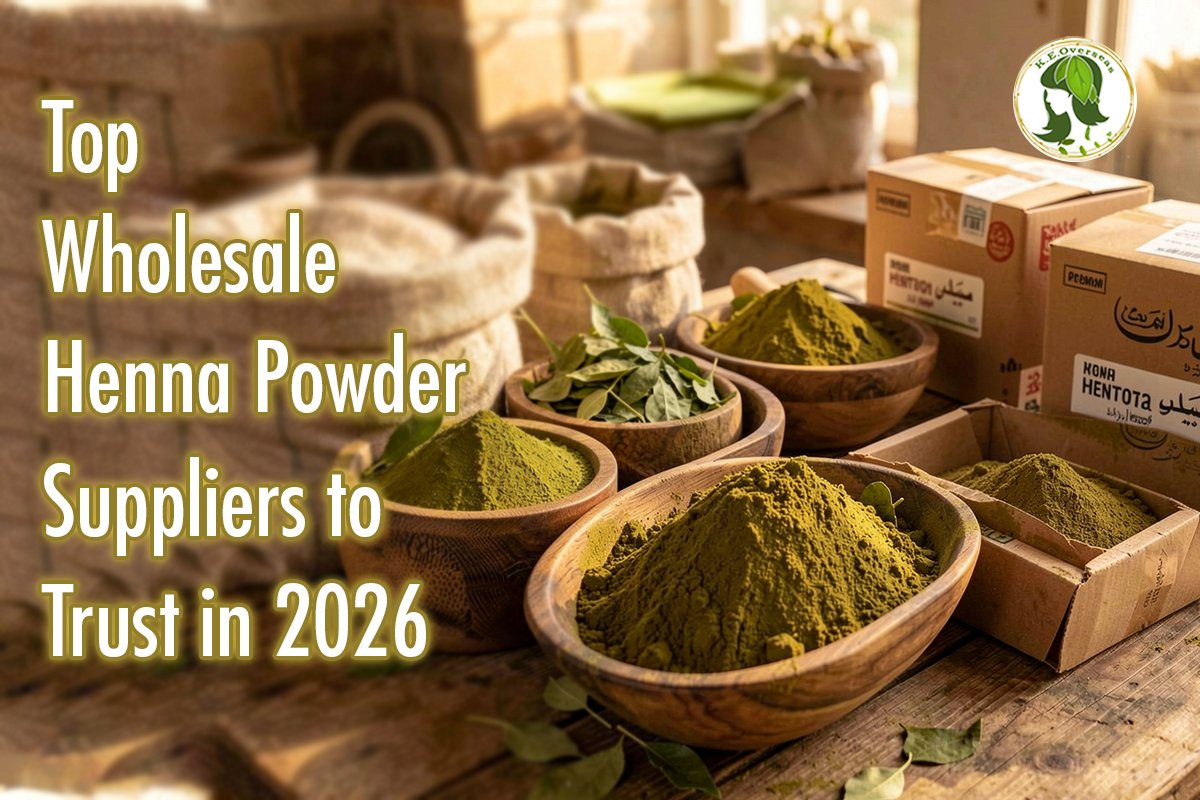
Top Wholesale Henna Powder Manufacturers to Trust in 2026
Picking the wrong wholesale henna powder manufacturer cost one US beauty brand three months of delays and a shipment full of adulterated powder. That’s a real thing that happens. Suppliers cut henna with fillers. Some send great samples, then ship something completely different in bulk. Others go silent after payment. If you’re sourcing henna powder for your salon, retail line, or private label in 2026, this guide is for you. We’ll walk through what makes a supplier actually trustworthy — and spotlight one henna powder manufacturer in India that’s been getting it right for over two decades.
The Real Reason US Brands Source Henna Powder From India
Let’s be direct. The USA doesn’t grow henna. India does — and it does so at a scale and quality no other country comes close to matching. Specifically, henna powder manufacturers in Rajasthan — from a small town called Sojat — supply a huge chunk of the world’s natural henna. That’s not marketing. That’s just geography and climate working in India’s favour.
So why do US brands keep going back? A few honest reasons:
- The raw material is superior. Sojat henna has one of the highest lawsone concentrations of any variety. Lawsone is the dye molecule. More lawsone = stronger, longer-lasting colour.
- Costs are still reasonable. Even after shipping, duties, and customs, henna powder wholesale from India works out cheaper than domestic or European alternatives.
- Manufacturers have scale. A mid-size facility in Rajasthan can produce tens of thousands of kilograms per month. That’s what growing brands need.
- Certification is possible. ISO, GMP, HALAL — these are not rare. Serious henna powder manufacturers in India have them. You just have to ask.
And if you’re still wondering whether any of this matters for your end customer, take a look at Google’s recent consumer insights on natural hair care trends. The shift toward chemical-free products is not slowing down.
What Separates a Good Supplier From a Bad One
Here’s something nobody tells new buyers: most henna powder manufacturers look the same on paper. Everyone claims “pure,” “natural,” “export-quality.” The difference shows up after the wire transfer.
So here’s what to actually look for before you commit to anyone:
- They show you the farm, not just the brochure. A trustworthy henna powder manufacturer in Rajasthan will have photos, videos, or even invite you for a visit. If a supplier can’t tell you where their henna plants grow, that’s a red flag.
- They send samples before production. No serious manufacturer hesitates to send samples. If they push back on this, walk away.
- Their certifications are current. ISO and GMP certificates have expiry dates. Ask for copies. Verify the issuing body is real.
- They understand US import requirements. This includes proper labelling, country-of-origin documentation, and ingredient declarations that comply with FDA cosmetic rules.
- They’re responsive — not just at first. Pay attention to how fast they reply after the first email vs. after you’ve placed a trial order. That gap tells you a lot.
- They have real references. Not stock photos. Actual buyer testimonials, visit galleries, or verifiable client names.
- Their pricing is transparent. Hidden charges on freight, packaging, or documentation are common tricks. Good wholesale henna powder manufacturers quote everything upfront.
For a deeper breakdown of how to evaluate suppliers, check out our guide on how to pick the right henna powder manufacturers for your private label.
Kirpal Export Overseas: One of India’s Most Trusted Henna Powder Manufacturers
There are dozens of henna powder manufacturers in Rajasthan. Most are fine for local buyers. Very few are set up for the requirements of international trade — documentation, quality consistency, packaging standards, and communication in English across time zones.
Kirpal Export Overseas (KEO) iis And they’ve been doing it since around 2000.
Who Runs KEO?
The company was built by Mr. Sunil Walia, who has spent his career in the herbal hair colour industry. His wife, Mrs. Payal Walia, serves as Vice-President and manages a big chunk of the business operations. This isn’t a faceless export house. There are actual people behind it, which matters when something goes wrong with a shipment, and you need someone to pick up the phone.
What They Make
KEO’s product line goes well beyond plain henna powder. Their full range includes:
- Natural Henna Powder — Sojat grade, triple-sifted options available
- Indigo Powder — used for natural black and dark brown shades
- Herbal Hair Color Blends — henna-based, for brands wanting ready-to-use formulations
- Beard and Eyebrow Color — a growing category in the men’s grooming space
- Indian Herb Powders — amla, shikakai, brahmi, and others
- Hair Care Products — shampoos and conditioners for brands wanting a full line
The range matters because US brands often don’t want to juggle five different suppliers. Having henna powder wholesale and complementary products under one roof simplifies procurement a lot.
Certifications KEO Holds
KEO carries ISO, GMP, and HALAL certifications. For US buyers, the GMP (Good Manufacturing Practice) certification is particularly important. It proves the facility follows documented production and hygiene standards — the kind regulators care about if your product ever gets flagged at customs.
They also use what they call “active packaging” — essentially moisture-barrier packaging designed to preserve the henna’s dye potency over long shipping distances. If henna absorbs moisture in transit, the colour payoff drops. This is a practical solution to a real problem that cheaper suppliers ignore.
Real-World Case Study: A US Brand Launches a Private-Label Henna Line With KEO
This is based on how KEO typically works with international buyers. The details reflect a composite of the kind of projects they handle.
The Situation
A small US-based beauty brand — three years old, mostly selling hair oils — wanted to add a natural hair colour line. Their existing supplier was in Europe, slow, expensive, and couldn’t do private-label henna powder in quantities under 500 kg. That MOQ was too high for a brand testing a new category.
They needed a supplier who could:
- Work with lower minimum order quantities while they test the market
- Provide certified henna powder — specifically HALAL, for their target demographic
- Handle custom packaging under their brand name
- Ship with full export documentation to avoid customs delays
How KEO Handled It
KEO walked them through the process in stages, not all at once:
- Farm photos and raw material source: Before any money changed hands, KEO sent photos and a short video of their henna farm in the Sojat region. The brand could see exactly where its product was coming from. Small thing — but it built immediate confidence.
- Sample shipment: KEO sent 500g samples of three different grades of henna powder. The brand tested dye release, texture, and fragrance. They picked the Sojat triple-sifted grade for their line.
- Packaging design: KEO’s team worked with the brand’s designer on packaging that met US labelling requirements — ingredient list, net weight in grams and ounces, country of origin, and contact details.
- Trial order — 100 kg: Much lower than the European supplier’s 500 kg MOQ. KEO ran quality checks on the batch before dispatch and included a Certificate of Analysis.
- On-time shipping: The shipment arrived within the agreed window. Customs clearance went smoothly because the documentation was complete.
What Happened After
The brand launched the line. Sold out within six weeks. They placed a second order — this time 300 kg — and are now on a quarterly reorder schedule. The henna powder wholesale pricing KEO offered at that volume gave them a healthy margin, even after accounting for US import duties and local packaging.
The lesson here isn’t that KEO is perfect. It’s that a manufacturer who’s actually set up for export — with certifications, documentation experience, and flexible MOQs — makes the whole process far less painful for a first-time importer.
Henna Powder Wholesale Pricing: What to Expect in 2026
Pricing for henna powder wholesale shifts depending on a handful of variables. Here’s what drives the number:
- Grade: Standard sifted henna vs. triple-sifted Sojat grade. The latter costs more but has higher lawsone content and a finer texture.
- Order size: Most henna powder manufacturers in India start MOQs around 50 to 100 kg for plain powder. Private-label orders usually require more because of packaging setup costs.
- Packaging type: 25 kg bulk bags cost less per kg than retail-ready 100g sachets. Factor in the packaging when comparing quotes.
- Private-label work: Design, printing, and custom packaging add to the cost but let you sell at a retail premium.
- Shipping terms: FOB (Free On Board), pricesincludet freight on you. CIF (Cost, Insurance, Freight) includes shipping to your port. Know which you’re being quoted.
A practical tip: always ask for the Certificate of Analysis (COA) with each batch. Any wholesale henna powder manufacturer worth their salt sends this automatically. If you have to ask twice for it, that tells you something about how seriously they take quality control.
Step-by-Step: How to Place Your First Wholesale Henna Order
If you’ve never imported henna powder from India before, the process can feel overwhelming. It’s actually straightforward once you know the sequence:
- Make a shortlist. Find 3 to 5 henna powder manufacturers in Rajasthan with verifiable certifications. Check their websites, LinkedIn pages, and any trade directory listings.
- Email them — and notice how they respond. Ask the same set of questions to each. How fast do they reply? Are their answers specific or vague? This tells you a lot before you ever see a sample.
- Request samples. Always. Test dye release by doing a patch on your own hair or a strand test. Check for a metallic smell, which signals chemical additives.
- Ask for certifications. Request copies of ISO, GMP, HALAL, or whatever’s relevant for your market. Verify the issuing body is legitimate.
- Get a detailed quote. Ask for per-kg pricing at different volumes, packaging options, and whether the quote is FOB or CIF. Compare apples to apples.
- Start with a small trial order. 50 to 100 kg is enough to test quality at scale. Don’t commit to 500 kg on your first order with a new supplier.
- Build the relationship. The best wholesale henna powder manufacturers give better pricing, faster turnaround, and priority production slots to buyers who reorder consistently. Loyalty goes both ways.
Our detailed resource on how to choose a trusted henna manufacturer covers the vetting process in even more depth if you need it.
Is Natural Henna Actually Safe? What US Buyers Get Wrong
One question comes up a lot: Does henna powder damage hair? The honest answer is — pure henna doesn’t. But not all henna on the market is pure.
The problem is “black henna” or compound henna products that contain PPD (para-phenylenediamine) or other synthetic dyes mixed in. These can cause serious allergic reactions. When US consumers say henna burned their scalp, it’s almost always because of an adulterated product, not real henna.
Pure, 100% natural henna powder from a verified manufacturer in Rajasthan — the kind that comes with a COA and carries GMP certification — is safe for most people. It can actually improve hair texture for some users because the lawsone molecule binds to the hair protein keratin and adds a light coating.
If your customers are asking about safety, point them to our full breakdown: Does natural henna powder damage hair? It covers the science in plain language.
FAQs About Wholesale Henna Powder Manufacturers
Q1. Which region in India produces the best henna powder?
Sojat in Rajasthan. The dry climate and soil type there produce henna with a naturally high lawsone content — higher than most other growing regions worldwide. Most serious henna powder manufacturers in India source their raw material from this region.
Q2. How do I know if a henna powder supplier is legitimate?
Three things: verifiable certifications (ISO, GMP, HALAL), a clear answer about where their henna is grown, and willingness to send samples before a bulk order. Legitimate wholesale henna powder manufacturers don’t hesitate on any of these.
Q3. What is a typical MOQ for wholesale henna powder?
Somewhere between 50 and 100 kg for bulk orders. Private-label or OEM orders tend to start higher — often 100 to 200 kg — because of the setup involved in custom packaging. KEO has worked with lower MOQs for new brands still testing the market.
Q4. Can I get henna packed under my own brand name?
Yes, provided you find a manufacturer with OEM or private-label capability. Not all do this. Kirpal Export Overseas specialises in it — they handle everything from packaging design to final printed units ready for retail.
Q5. What documentation do I need to import henna powder into the USA?
At minimum: a commercial invoice, packing list, Certificate of Origin, and a Certificate of Analysis. Depending on how your product is classified (cosmetic vs. herbal supplement), you may need additional FDA documentation. A good henna powder manufacturer in India who’s done US exports before will know exactly what’s required.
Bottom Line
There’s no shortage of people selling henna powder wholesale. There’s a shortage of suppliers who are consistent, certified, transparent, and actually prepared for the realities of international trade.
If you’re sourcing for the US market in 2026, your checklist is simple: verified farm source, current certifications, real sample policy, clear export documentation, and a track record you can check. Kirpal Export Overseas ticks all of those boxes — and has been doing so for over 25 years.
Whether you need bulk henna powder, a full private-label line, or something in between, they’re worth a conversation. Start by visiting their product page and requesting a sample.