
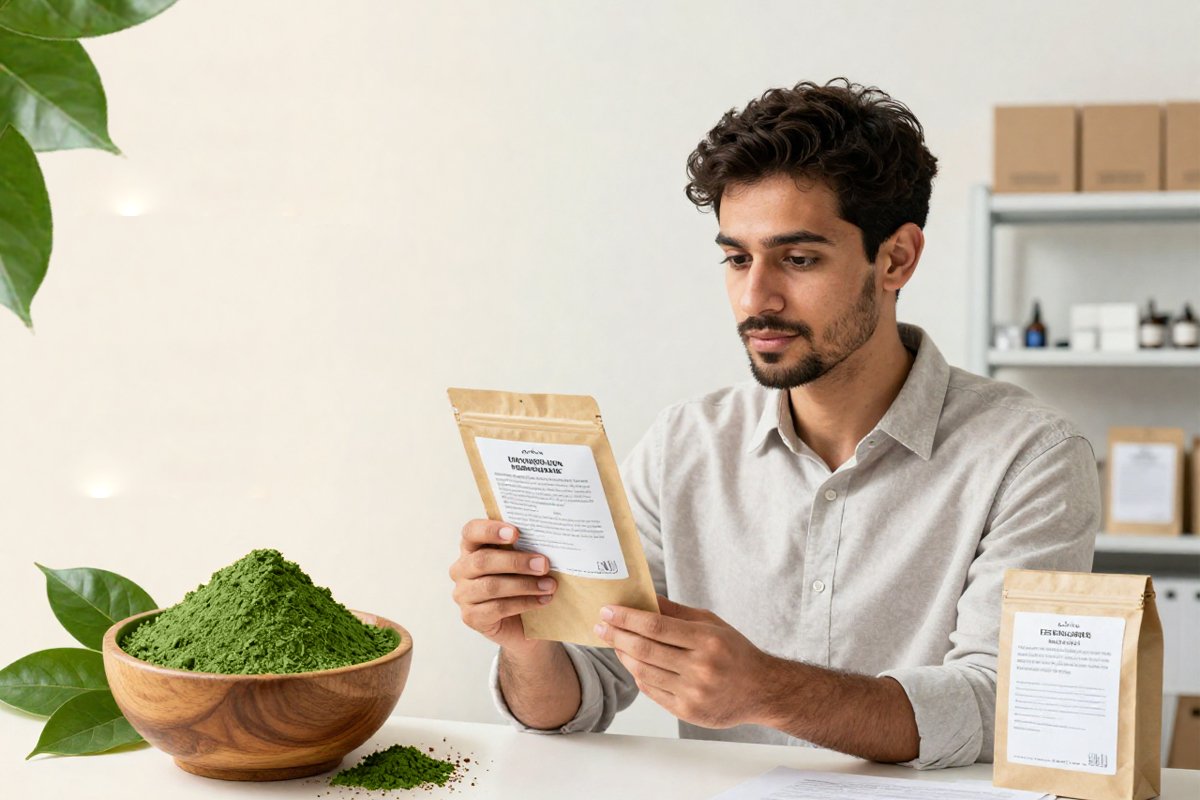
Henna Manufacturers: Are Their “Natural” Claims Actually Safe?
Walk into any beauty supply store in the USA and you’ll see shelves full of “natural” hair color. Most of them have green leaves on the packaging. Words like “herbal,” “chemical-free,” and “plant-based” are everywhere.
But spend five minutes talking to someone who’s had a bad reaction — scalp burns, hair loss, skin rashes — and you’ll realize something’s off. A lot of what’s being sold as “pure henna” isn’t pure at all.
So how do you know who to trust? That’s exactly what this guide is about. Whether you’re a consumer, a salon owner, or a brand looking to work with henna manufacturers, here’s what you actually need to know.
What “Natural” Really Means on a Henna Label — and What It Doesn’t
Let’s start with the basics. Real henna comes from one plant — Lawsonia inermis. That’s it. No exotic blends, no secret herbal formulas. Just dried, powdered leaves from that one plant.
As Wikipedia explains in its breakdown of henna, true henna gives an orange-to-reddish-brown color. That’s the natural result. Nothing darker.
So when you see natural henna manufacturers selling “jet-black henna” or “dark brown herbal color,” pause. Real henna cannot do that on its own. Something else is in that powder.
Genuine organic henna manufacturers will tell you this upfront. If a company avoids this question or dances around it, that tells you something.
Here’s what actual pure henna should look like:
- Greenish-brown powder with a grassy, earthy smell
- Produces a reddish-orange stain — never black or dark brown on its own
- No metallic salts, no synthetic dyes, no PPD
- Ingredient list says one thing: Lawsonia inermis
The “Natural” Loophole That Most Buyers Don’t Know About
Here’s something the beauty industry doesn’t talk about enough. In the USA, the FDA does not legally define what “natural” means for hair and cosmetic products.
That means any company — including henna suppliers — can print “all-natural” on their label without proving a single thing. It’s not technically lying. It’s just not regulated.
Some manufacturers take full advantage of this. They’ll mix in PPD (para-phenylenediamine) for a darker color. They’ll add metallic salts to make the stain last longer. They’ll blend cheap filler powders to stretch the product further.
PPD is worth talking about specifically because it causes real problems. It’s a chemical used in permanent hair dyes. In concentrated or unregulated amounts, it can cause chemical burns, severe allergic reactions, and long-term skin sensitivity. Several European countries have restricted it. Yet some products reaching American consumers still contain it — hidden behind the word “herbal.”
This isn’t a small issue. It’s a real reason why working with verified, certified henna manufacturers in India who follow proper protocols matters so much.
What Trustworthy Henna Manufacturers Actually Do Differently
Not every company in this space is cutting corners. There are top henna manufacturers out there doing things the right way. And the difference is usually visible if you know where to look.
According to this manufacturer selection guide on Henna Supplier, here are the things that separate honest suppliers from the rest:
They Show You Where the Henna Comes From
Good wholesale henna manufacturers don’t just tell you their henna is pure — they show you the farm. Photos, harvest processes, leaf quality. Henna powder manufacturers in Rajasthan, especially those sourcing from the Sojat region, often do this well because Sojat henna is considered the gold standard globally. High dye content, consistent quality, traceable origin.
If a company can’t or won’t show you the source, that’s a problem.
They Hold Real Certifications
Look for ISO 9001, GMP (Good Manufacturing Practices), and HALAL certifications. These come from outside the company. They require actual audits. They mean something.
Don’t just accept a logo on a webpage. Ask for the certificate document. A best henna manufacturer will send it without hesitation.
They Provide a Certificate of Analysis
A CoA is a lab report showing exactly what’s in a product batch — and what isn’t. If you’re buying bulk or wholesale, this document is non-negotiable. Honest organic henna manufacturers produce these regularly as part of their quality process.
If a supplier acts like you’re being difficult for asking, move on.
Real Talk: A Case Study on What Good Manufacturing Looks Like
Let me give you a concrete example of what a credible, transparent operation actually looks like in practice.
Kirpal Export Overseas (KEO) is an Indian manufacturer and exporter that’s been in the herbal hair care business for 25+ years. Founded around 2000 by Mr. Sunil Walia and his wife Mrs. Payal Walia (vice president), the company produces natural henna powder, indigo powder, and herbal hair colors under their own brand and as an OEM/private-label partner for brands around the world.
You can see their full range at kirpalexport.com, and there’s a detailed breakdown of their manufacturing approach in this blog post about KEO’s henna manufacturing process.
What makes them worth studying isn’t marketing — it’s the specifics of how they operate.
Their henna comes from Sojat, Rajasthan. They show the farms. Buyers can actually visit. This kind of traceability is rare and meaningful when you’re trying to verify what you’re putting on your customers’ hair.
They carry ISO, GMP, and HALAL certifications. Not just logos — actual certified processes. That matters for anyone importing into the USA or EU where buyers and distributors increasingly ask for documentation before placing orders.
They offer OEM and private-label manufacturing. For USA-based brands building their own herbal hair color line, this is a real option. KEO handles the formulation, sampling, production, and export-ready packaging. The process is structured — design, sample approval, production run — rather than informal.
They use active packaging. This sounds minor, but it isn’t. Henna powder can degrade during long international shipping if packaging isn’t done right. Active packaging preserves the dye content and shelf life, which directly affects end-user results.
Their blog is current. As of early 2026, they’re actively posting content. That might seem like a small thing, but a supplier who communicates regularly and openly is a supplier who’s actually present and accountable.
This is the kind of operation buyers in the USA should benchmark against when evaluating any henna manufacturers in India for bulk or private-label partnerships.
Red Flags to Watch For With Any Henna Supplier
Here’s a practical list. These aren’t theoretical — they’re things real buyers have encountered.
- No physical factory address listed anywhere on the website
- Promises of jet-black or dark results described as “100% natural”
- No certifications, or certifications that can’t be verified with the issuing body
- Vague ingredient lists that say “herbal blend” without specifics
- Unusually low prices for bulk orders (a sign of fillers or low-grade raw material)
- Refusal to provide a Certificate of Analysis
- No farm or sourcing information
If more than two of these apply to a supplier you’re considering, it’s worth stepping back.
Specific Advice for USA Buyers Importing Henna
If you’re sourcing from henna manufacturers in India for distribution or resale in the USA, a few extra things apply.
The FDA classifies henna hair dye as a cosmetic. That means it needs to comply with cosmetic labeling and ingredient regulations. “All natural” alone won’t pass FDA requirements. Every ingredient needs to be declared.
Some importers test incoming shipments independently when they arrive in the USA. It adds cost but removes guesswork, especially when working with a new supplier for the first time.
And one thing worth knowing: the country of origin matters within India too. Henna sourced from Sojat, Rajasthan, consistently outperforms henna blended from lower-grade regional sources. When you’re talking to henna suppliers, ask specifically where in India the raw powder comes from.
For USA buyers exploring the wider herbal hair care market, Herbal Hair Colors is a solid reference point for understanding what well-formulated natural options actually look like.
If you want a broader picture of what responsible sourcing of organic henna involves, this resource on organic henna sourcing is worth reading before you finalize any supplier.
Before You Place Your First Order: A Simple Checklist
- Ask for ISO, GMP, or HALAL certifications and verify them
- Request a Certificate of Analysis for the specific batch
- Confirm the raw henna source — ideally Sojat, Rajasthan
- Ask directly: Does this product contain PPD?
- Order a sample before committing to a bulk order
- Look for a supplier with at least 10 years of verifiable history
- Check if they offer OEM/private-label services if you’re building your own brand
Questions People Actually Ask About Henna Safety
Is all henna powder safe to use on hair? Pure henna from Lawsonia inermis has a long, safe history of use. The problem is what gets added to it. Always check ingredient lists and ask for lab documentation from your supplier.
What’s the difference between natural and organic henna? Natural means no synthetics. Organic henna manufacturers go further — the plant was grown without pesticides, verified by a third-party certifier. If that matters to your customers, ask for proof.
Why do so many people specifically look for henna from Rajasthan? The growing conditions in Rajasthan — especially Sojat — produce leaves with unusually high dye content. That’s why henna powder manufacturers in Rajasthan have built a global reputation over decades.
Can I find henna manufacturers based in the USA? Some companies operate as henna manufacturers in the USA by importing Indian henna and packaging or distributing it locally. But the raw material almost always comes from India. Always ask about the origin of the actual powder.
How do I know a manufacturer’s “natural” claim is real? Ask for a CoA. Ask for certifications. Ask for the raw material source. Honest natural henna manufacturers won’t hesitate. The ones who do hesitate are telling you something.
The Bottom Line
The word “natural” on a henna label means very little on its own. What actually tells you something is what a manufacturer is willing to show you — their farms, their certifications, their lab results, and their process.
Companies like Kirpal Export Overseas give buyers a real benchmark. They’re not doing anything exotic. They’re just being transparent about where their product comes from and how it’s made. That shouldn’t be rare in this industry, but it is.
If you’re buying henna — for yourself, for your brand, or for your clients — hold your supplier to that standard. Ask for documentation. Ask about Sojat. Ask about PPD. And if they can’t answer those questions clearly, there are best henna manufacturers out there who can.