
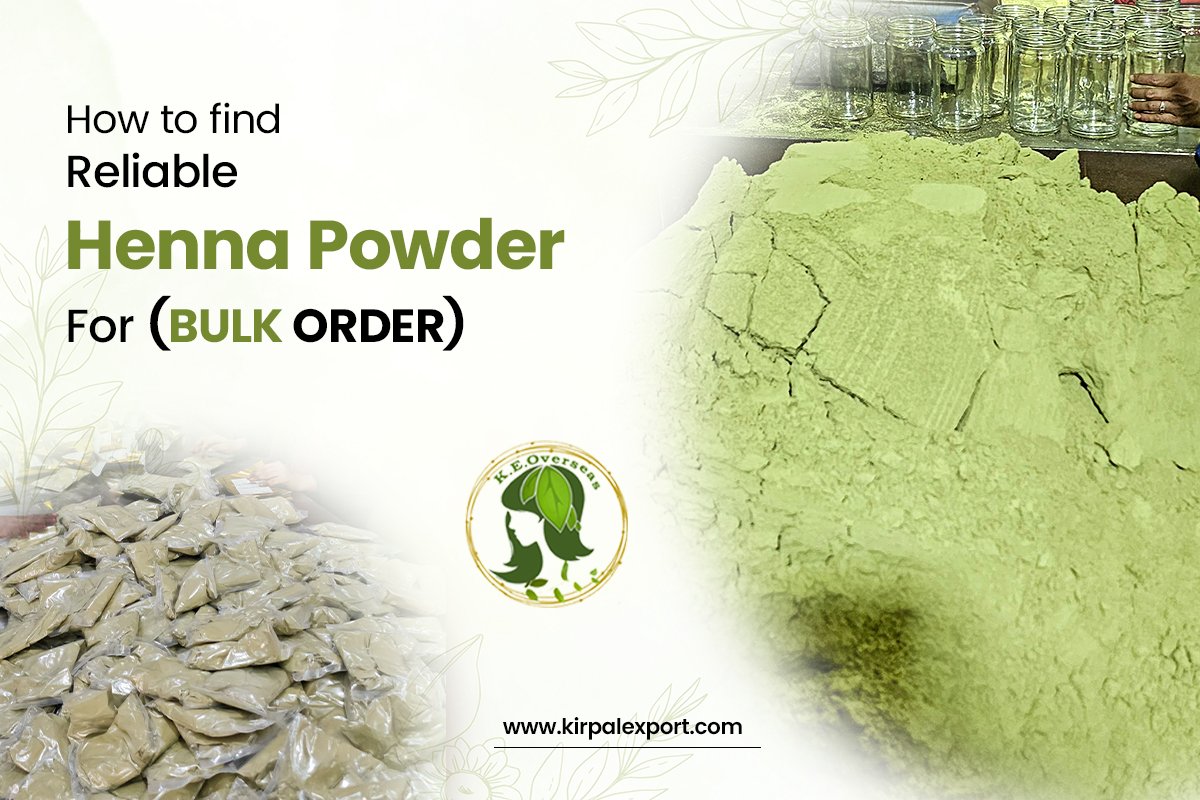
Buying henna powder in bulk is different than a small retail buy. You need product quality, consistent supply, and paperwork. Below, I give a direct, practical guide for international bulk buyers. It follows EEAT: practical experience, technical details, and clear checks you can run before you place an order.
Quick summary
- First, identify suppliers with export experience.
- Next, verify product quality with lab tests and a Certificate of Analysis (COA).
- Then, confirm compliance, packaging, and lead times.
- Finally, run a small pilot shipment before scaling up.
Why sourcing from henna Manufacturers in India
India produces much of the world’s henna leaf crop. Therefore, you will find many manufacturers and exporters there. Moreover, manufacturers often offer export packing, shipping knowledge, and lab testing. That said, supplier capability varies widely. So you must verify each manufacturer of henna in India.
First steps: shortlist and research suppliers
- Search by product and terms like “wholesale henna Suppliers” and “henna powder manufacturer.”
- Prefer companies that list export documents, COA, and test reports.
- Check references. Ask for recent buyer contacts or trade-reference emails.
- Review online listings and B2B trade portals. Also check business registration (GST/IEC in India) and past years active.
Technical specs: be specific.
For bulk buying, always request measurable specs. For example:
- Lawsone content (active dye)—ask for a % by dry weight. The typical range is about 0.5–2%, but values vary by cultivar and processing. Ask for an HPLC report.
- Moisture content—request a value and target (commonly ≤8–10%). High moisture shortens shelf life.
- Particle size/mesh—specify mesh or micron range (e.g., 60–100 mesh) for consistent mixing and application.
- Purity & additives—require a statement: “100% henna leaf powder, no metallic salts, no synthetic dyes.”
- Microbial load—total plate count and yeast/mold results. Ask for microbial test reports.
- Heavy metals & pesticides ICP-MS or equivalent heavy metal testing and pesticide residue reports.
- Shelf life and storage advice—look for recommended temperature and humidity limits.
Use active tests. For example, ask for HPLC for lawsone, GC-MS for pesticide residues, and ICP-MS for metals.
Documents and certifications to request
- Certificate of Analysis (COA). Always.
- MSDS / Safety Data Sheet. Always.
- Organic certification (if you need organic): USDA Organic, Ecocert, or equivalent.
- GMP/ISO (if relevant).
- Export license / IEC (India). Verify registration.
- Phytosanitary or fumigation certificates may be needed for plant materials in your country. Ask your customs broker.
- Third-party lab reports—independent lab results carry more weight than in-house reports.
Production, packing, and logistics checks
- Confirm production capacity and lead times. Ask, “Can you supply X tonnes per month?”
- Check batch traceability. Each batch should have a batch code and a COA.
- Inspect packing: inner food-grade bags, outer cartons, and humidity absorbers as needed.
- Discuss shelf-life labeling and storage guidance.
- Confirm FOB/CIF terms and sample shipping options.
Practical verification: sample testing and inspection
- Order samples from at least three henna suppliers.
- Test samples in an independent lab for lawsone, moisture, heavy metals, and microbial load.
- Request a factory visit or hire a third-party inspection (pre-shipment).
- Check packing and random sample weight during inspection.
- Run a pilot shipment (small container) before a full contract.
Negotiation and contract points
- Set payment milestones: sample approval → partial payment → goods release.
- Specify quality acceptance criteria in the contract. Include allowable deviation ranges.
- Require replacement or refund terms for non-conforming batches.
- Include clear INCOTERMS and a dispute resolution clause.
- Ask for insurance terms on transit.
Short case study
Example: A U.S. buyer needed 5,000 kg. First, they requested samples from three henna Manufacturers in India. Next, they ran independent HPLC and heavy metal tests. Then they hired an inspector for a pre-shipment check. Finally, they started with one container and scaled after two successful shipments. This stepwise approach reduced risk and improved supplier reliability.
Quick supplier evaluation checklist
- The supplier has IEC/GST and export history.
- COA, MSDS, and third-party lab tests are available.
- Clear specs for lawsone, moisture, and particle size.
- Packaging meets food-grade/export standards.
- Accepts reasonable payment and inspection terms.
- Positive trade references or verified reviews.
FAQs
Q: How do I verify lawsone?
A: Ask for HPLC reports from an independent lab. Also, test your sample.
Q: Are “natural” claims enough?
A: No. Request a COA and pesticide tests.
Q: What packaging protects quality?
A: Food-grade inner bags, humidity absorbers, and sturdy outer boxes.
Q: What certifications matter for import?
A: COA, MSDS, and any organic or food-safety certificates you require.
Final thought
Buy henna powder in bulk like you would any raw material: verify measurable specs, confirm paperwork, and test samples independently. By following the steps above, you will reduce supply risk and improve product consistency. For international buyers, working with experienced henna Manufacturers in India pays off — provided you insist on objective tests and clear contractual terms.