
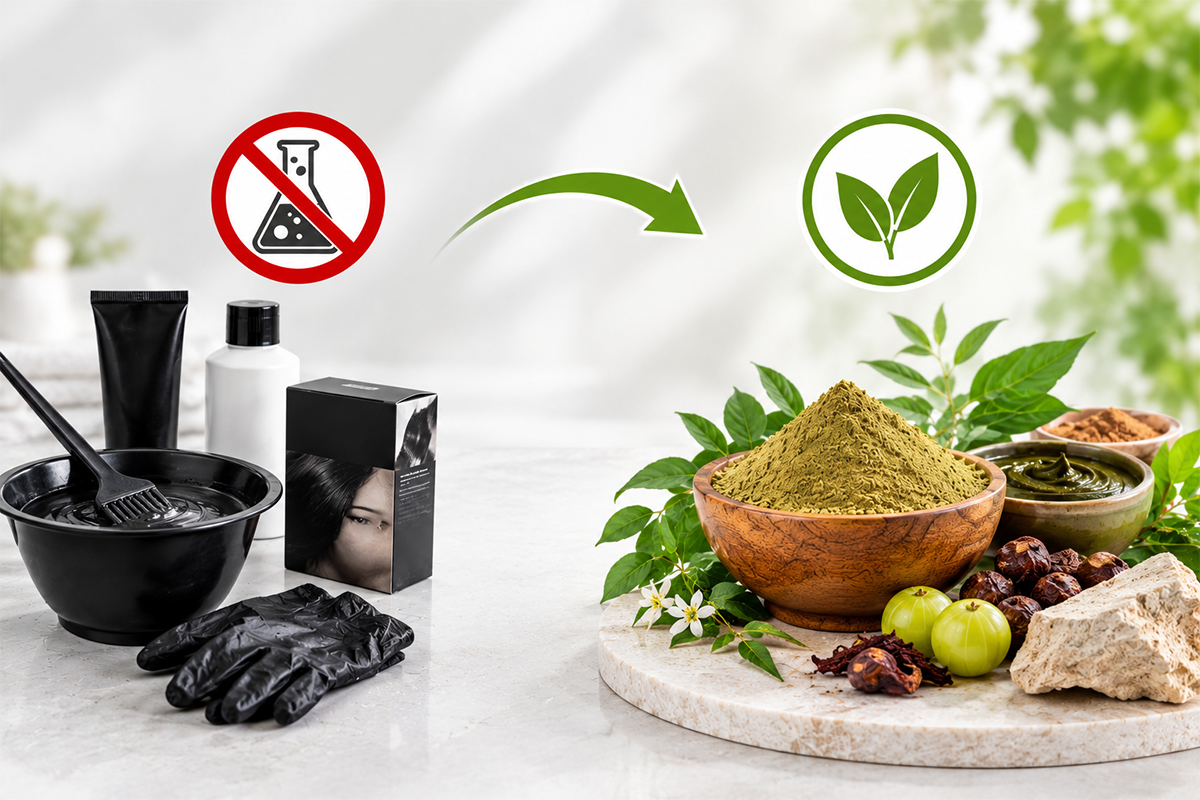
What did a chemist notice in 1863 that ended up on salon shelves, and why is it suddenly back in European rulebooks? In 1863, August Wilhelm von Hofmann saw that para-phenylenediamine (PPD) turned brown-black as it oxidized. By 1907, a young French chemist named Eugène Schueller was selling the first commercial oxidative hair color to Parisian hairdressers. Henna and indigo had been coloring hair for at least 3,000 years, according to historians of the industry, and they never really left. In April 2026, the European Commission published Regulation (EU) 2026/909, writing new limits for four synthetic hair dye ingredients into law. So is the oldest hair color about to have its moment?
Herbal hair colors are not replacing chemical dyes across the board. They are winning ground in sensitive-scalp, clean-label, and fast-regulating markets. For hair color manufacturers, that means growing demand for plant-based hair dye formulas backed by proper paperwork. Permanent chemical dye still dominates sales, so the accurate story for 2026 is a selective shift, not a takeover.
What Changed for Hair Dye in 2026?
Three things moved this year: Europe tightened ingredient rules, researchers revisited long-term dye use, and Indonesia set a hard date for halal certification.
The European rulebook got longer.
Regulation (EU) 2026/909 entered into force in May 2026, with transition periods that vary by ingredient and product. It added restricted entries for four hair dye ingredients: HC Blue No. 18, HC Red No. 18, HC Yellow No. 16, and hydroxypropyl-p-phenylenediamine. Each now has maximum concentrations and label warnings, and the last is capped at 2 percent. Before this, none of the four was directly regulated in the EU Cosmetics Regulation. “Restricted” does not mean “banned.”
A draft notified to the World Trade Organization on 8 July 2026 would go further. It proposes prohibiting two colorants, Basic Brown 16 and Basic Blue 99, in non-oxidative hair dyes after an EU scientific committee opinion in February 2026. Drafts can change before adoption.
PPD itself remains legal in the EU. It is permitted in oxidative dyes up to 2 percent on the head, and it is a known allergen. Dutch public health researchers estimate that roughly 0.2 to 1 percent of consumers react to it.
Does hair dye cause cancer?
The honest answer is that it is unsettled. A 2026 systematic review in JAAD International, covering 96 studies, flagged a possible rise in risk for frequent, long-term users in certain groups. Its authors also listed real limits in study design and confounding. The International The Agency for Research on Cancer rates occupational exposure to hair dyes as probably carcinogenic but leaves personal use unclassified. Other large studies have found no clear overall rise in risk.
An association is not proof of cause. For the market, though, perception matters, because buyers hear “possible” and start asking for alternatives. Anyone with personal health concerns should speak with a doctor. This article is general information, not medical advice.
A different deadline: Indonesia, October 17
On October 17, 2026, mandatory halal certification for cosmetics and personal care products takes effect in Indonesia, the world’s largest Muslim-majority country. Products circulating without it risk administrative sanctions. The lesson reaches beyond one country: paperwork is now part of the product.
Is Herbal Hair Color Really Replacing Chemical Dyes?
Not yet, and not everywhere. The 2026 review above puts the global hair color market above US$23 billion, with permanent dyes making up about 80 percent of products. Published estimates of the natural or plant-based slice vary by roughly an order of magnitude, depending on who is counting and how “natural” is defined. Treat any single percentage with suspicion.
Where the pull is strongest: buyers worried about sensitivity, brands built on plant-based claims, and markets where ingredient rules keep tightening. Here is how the three main categories differ.
| Category | How it colors | Typical result | What to check |
| Permanent chemical (oxidative) | Small dye precursors, such as PPD-type molecules, enter the hair and develop with a developer. | Wide shade range, lightening possible, long wear | Ingredient limits in your market, allergy warnings, patch-test instructions |
| Henna-based hair color (low chemical) | A henna base with a smaller share of synthetic ingredients | Wider palette than pure herbal | What the synthetic share actually contains |
| 100% herbal (henna, indigo, herbs) | Plant pigment binds to hair keratin; deposit only | Reddish-brown from henna, deeper tones with indigo; no lightening | Plant sourcing, purity, absence of metallic salts |
What Can Herbal Hair Color Not Do?
Henna has one headline shade, reddish-orange, and everything else is a negotiation with indigo and other herbs. A few limits are worth knowing before you build a range around it:
- It adds color; it doesn’t lift it. Plant colors deposit pigment, so they cannot lighten dark hair.
- “Low chemical” is not “chemical-free.” The word to read is “low.” Ask exactly what the synthetic portion is.
- Composition matters for later treatments. Some store-bought henna reportedly contains metallic salts that can react with peroxide in a later chemical service, which is why ingredient transparency matters.
- Plant-based is not allergy-proof. A patch test is still sensible.
How Do You Choose Among Hair Color Manufacturers, Hair Dye Suppliers, and Exporters?
Choose nouns, not adjectives. A practical checklist:
- Get the full ingredient declaration for every shade. Include what the “low chemical” part contains.
- Ask for current copies of certifications and a Certificate of Analysis. ISO, GMP, and HALAL are common ones, and a batch-level CoA shows what you are actually receiving.
- Match the paperwork to your destination. In the EU, check the ingredient changes above. In the US under MoCRA, the brand owner is the “responsible person” for product listing, safety substantiation, and adverse-event reporting, so you need ingredient declarations and batch records from whichever hair color manufacturers you choose. For Indonesia, plan for halal certification.
- Clarify who handles logistics. Some hair color exporters treat shipping, customs paperwork, and labeling as part of the project from day one, and others leave it to you. Ask which.
- Test small first. Run patch tests and a sample batch before committing to hair color wholesale volumes.
Brands planning their own line can see what a full-service offer looks like (custom formulation, packaging from eco-friendly pouches to customized boxes, and batch-level testing support) in this overview of private label hair color manufacturers.
FAQ
Q: Are herbal hair colors replacing chemical dyes in 2026?
A: Not across the board. Permanent chemical dye still makes up about 80 percent of hair dye products, according to a 2026 review. Plant-based hair dye is gaining ground in specific segments, such as sensitive-scalp buyers and clean-label brands.
Q: Is PPD banned in the EU?
A: No. PPD is permitted in oxidative hair dyes up to 2 percent on the head, with allergy warnings. It is regulated, not banned.
Q: What is the difference between henna-based hair color and 100% herbal color?
A: Henna-based hair color in the low-chemical category blends a henna base with a smaller share of synthetic ingredients, which allows a wider palette. 100% herbal color uses only plant materials such as henna, indigo, and other herbs.
Q: Can plant-based hair dye lighten hair?
A: No. Plant colors deposit pigment and cannot lift natural color.
Q: Can herbal hair color still cause allergies?
A: Plant-based does not mean allergy-proof. A patch test before full use is a sensible habit for any hair color.
Q: What should buyers ask hair dye suppliers for?
A: Ingredient declarations for each shade, current certificates (such as ISO, GMP or HALAL), a Certificate of Analysis per batch, and batch records for your market’s compliance files.
Q: What changes on October 17, 2026, for cosmetics sold in Indonesia?
A: Mandatory halal certification for cosmetics and personal care products takes effect. Exporters should confirm exact requirements with the certification authority.
Q: What does “low chemical” mean on a hair color label?
A: There is no universal definition. In supplier descriptions it generally signals a lower percentage of synthetic ingredients, so always request the ingredient list.
What Should You Take Away From the Herbal Shift?
The oldest hair color is being tested by the newest rules. Herbal hair colors are not replacing chemical dyes, but they have moved from niche footnote to serious category. They carry honest limits too: no lightening, a narrower shade range, and a need for transparent ingredient lists. The practical advice for buyers is to compare documents before prices and expect the paperwork bar to keep rising. Put ingredient declarations and certificates from at least two hair color manufacturers side by side before deciding.