
How to Cover 100% Gray Hair With Henna and Indigo: A Guide for Switzerland
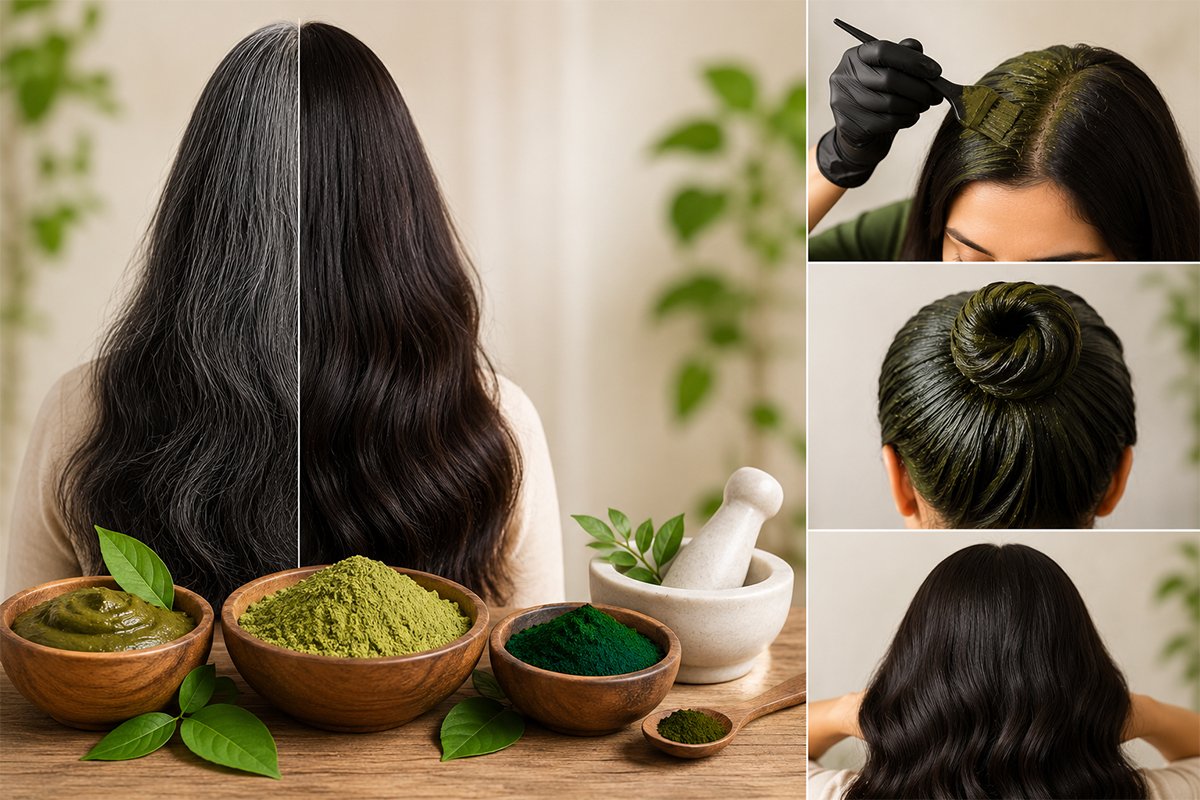
Covering 100% gray hair with a natural henna hair dye takes two separate applications. Apply pure henna first and leave it on three to six hours; this saturates resistant gray with lawsone, the pigment henna releases fastest on hair with no melanin to compete with it. Rinse, let hair dry, then apply indigo for 45 to 90 minutes to layer blue pigment over the henna base and build brown or black. Skip the wait, or buy a diluted henna hair dye cut with filler, and the result comes out patchy or stuck at orange.
Why Henna Alone Never Gets You Past Orange
Gray hair isn’t just lighter hair. It has no melanin, and the cuticle on white and silver strands sits slightly more open than on pigmented hair nearby, which is why henna grabs onto it so fast and so intensely. Lawsone, the dye molecule in henna for hair, bonds directly to keratin and stays there. It cannot produce brown or black by itself, no matter how long you leave the paste on or how hot you make the mix. Three hours or nine hours, gray hair treated with henna alone lands somewhere between copper and fire-engine orange. Brands that promise a one-step “dark henna” for gray coverage are almost always blending in indigo, cassia, or something else under a vague ingredient label. True single-plant henna hair dye only ever does red-orange. Anyone who’s used henna for hair for years already knows this; it’s the newcomers expecting brown from the jar who get caught off guard.
The Two-Step Method, Step by Step
This is the sequence that gets full, even coverage on stubborn gray without a second guess:
- Clarify first. Wash with a sulfate shampoo a day or two ahead. Oil, silicone, and old conditioner sit on the cuticle and block the dye from reaching it. That’s the single biggest reason people report thin, uneven color.
- Mix the henna the night before. Combine henna powder with a mildly acidic liquid, lemon juice or diluted apple cider vinegar, to a yogurt-thick paste, cover it, and let it sit 8 to 12 hours so the lawsone releases.
- Apply section by section to dry, product-free hair. Saturate the roots especially; that’s where gray concentrates and where coverage most often falls short. Cover with a cap, leave for three to six hours.
- Rinse with water only. No shampoo yet. Let the hair dry fully, or close to it, before moving to indigo. Applying indigo to soaking-wet hennaed hair dilutes it, and that’s the most common cause of orange roots with brown lengths.
- Mix indigo fresh, right before use, with a pinch of salt to help it penetrate coarse, resistant grays. Unlike henna, indigo starts oxidizing the moment it’s wet, so it can’t rest overnight.
- Apply, wait 45 to 90 minutes, then rinse with cool water only — hot water pulls indigo pigment back out before it’s finished bonding.
Don’t shampoo for another 48 hours. The color is still developing under the surface during that window, and washing early is how people end up lighter and warmer than they mixed for.
One-Step or Two-Step: Which Fits 100% Gray Hair
Premixed, one-step pastes exist and save time, but they trade off coverage on hair that’s fully gray. Here’s how the two approaches actually compare once resistant white strands are involved:
| Factor | Two-Step (henna, then indigo) | One-Step (premixed) |
| Coverage on 100% gray | Full, even, most reliable | Can leave thin or gappy patches |
| Depth achievable | Darkest brown to near-black | Medium brown ceiling |
| Undertone | Cooler, less red showing through | Warmer, visible red base |
| Time per session | 6–8 hours across two stages | 3–4 hours in one sitting |
| Best used | First 2–3 applications, or anyone fully gray | Maintenance once color is already built up |
If you’re more than half gray, start with two-step. Once three applications have built a solid base, switching to one-step for touch-ups is reasonable — but going one-step from the first try on fully white hair is the single fastest route to a patchy result.
Why the Henna Powder Itself Changes Your Results
Two people can follow the exact same steps and get different outcomes because the powder isn’t the same. This is the part almost nobody covering “how to apply henna” actually explains, because most of them are writing about using henna, not sourcing it.
Lawsone content varies by harvest, soil, and how the leaf was dried. A henna powder supplier selling stock that’s a year old, stored in heat, or ground coarse will hand you a product with weaker dye release even if the label says 100% pure. Fine, evenly milled powder (the kind graded as Body Art Quality) releases pigment faster and more completely than coarse, unsifted stock. That matters directly for how much of your gray actually takes color on the first pass.
There’s also a safety layer here. Some products sold as henna hair dye are “compound henna”: pure lawsonia inermis cut with metallic salts to speed up staining or fake a darker tone straight out of the bag. Metallic-salt henna reacts badly with any later chemical dye application, sometimes heating up on contact and damaging the hair. Not every seller discloses this, and not all hair dye manufacturers list it plainly on the packaging. Before buying in any volume, ask for a Certificate of Analysis showing lawsone percentage and confirming no metallic salts or PPD, and check that the INCI listing names lawsonia inermis (and indigofera tinctoria, if it’s a blend) as the only actives. Reliable henna manufacturers will hand this over without hesitation; a supplier who can’t or won’t is telling you something.
For volume buyers, most consistent stock still traces back to henna manufacturers in India, where the Sojat belt in Rajasthan grows the bulk of the world’s commercially usable Lawsonia inermis crop and where triple-sifting for fine, uniform powder is standard practice among established exporters.
Sourcing Henna Hair Dye as a Buyer in Switzerland
Switzerland doesn’t run cosmetics through the EU’s CPNP notification system the way EU member states do. Instead, the Federal Food Safety and Veterinary Office (FSVO) puts the compliance burden on the importer directly, under the Swiss Cosmetics Ordinance (OCos). There’s no pre-market registration step to hide behind — you’re expected to hold a Product Information File confirming safety data, ingredient sourcing, and PPD status before the product ever reaches a shelf or a salon chair.
Practically, that means a few things for anyone buying a natural henna hair dye for the Swiss market:
- Confirm PPD-free status in writing, not just on the front label — Swiss enforcement can request the file directly since it doesn’t have automatic access to EU notification records.
- Labeling and instructions should appear in German, French, or Italian; English alone is a gray area best avoided for a product applied directly to skin and scalp.
- A henna powder supplier with existing ISO 22716 or GMP documentation makes building that Product Information File faster, since much of what Swiss compliance asks for overlaps with what serious exporters already track.
None of this shows up in the average grey-coverage tutorial, because most of them are written for someone standing in their bathroom, not someone clearing a shipment through customs.
Fixing the Problems That Show Up Most
- Orange roots, dark lengths. New gray regrowth takes henna faster than hair that’s already colored. Let henna dry fully on the roots before indigo touches them, or apply indigo to the roots first and work outward.
- Patchy coverage on coarse gray. Tight cuticles resist dye. Add a pinch of salt to the indigo mix, extend henna to four or five hours, and wrap with a warm (not hot) towel over the cap.
- Color fading warm within two weeks. Indigo fades faster than henna does. Hot water, chlorine, and sulfate shampoo all strip it early — switch to sulfate-free, lukewarm washing, and plan an indigo-only root touch-up every four to six weeks.
Aftercare That Actually Protects the Result
Rinse with cool water only for the first two to three days. No shampoo. Skip conditioner, oils, and heat styling until color has fully set, usually 48 to 72 hours. After that, sulfate-free shampoo and cooler water keep indigo from fading early, and an indigo-only gloss every couple of months on the lengths keeps brown and black tones from warming up between full applications. This is really where a properly sourced natural henna hair dye earns its reputation — the color that looked flat on rinse day usually deepens and settles beautifully by day three.
FAQ
Q. How long does henna and indigo last on 100% gray hair?
Henna is permanent. Indigo is semi-permanent and fades over four to six weeks, so full coverage on 100% gray hair usually takes two to three applications, then indigo-only root touch-ups on that same cycle.
Q. Why did my roots come out orange while the rest of my hair turned brown?
Timing. New regrowth absorbs henna faster than hair colored earlier, so indigo applied before the roots dry fully just slides off. Apply indigo to roots first, or let henna dry completely before starting indigo.
Q. Can I use henna and indigo on hair that’s been chemically dyed before?
Pure henna and indigo are generally fine over chemically dyed hair. The real risk is compound henna cut with metallic salts, which can react with a later chemical dye and damage hair. Ask your supplier for a Certificate of Analysis first.
Q. How can I tell if a henna powder supplier is selling pure henna, not a compound blend?
Check the INCI list for lawsonia inermis (and indigofera tinctoria, if it’s a blend) as the only actives, and ask for a Certificate of Analysis confirming no metallic salts or PPD. A supplier who hesitates is worth skipping.
Q. Is it straightforward to import natural henna hair dye into Switzerland?
There’s no EU-style pre-market notification, but the FSVO still holds importers responsible for a Product Information File, PPD-free confirmation, and labeling in German, French, or Italian. A henna powder supplier with existing ISO 22716 documentation speeds this up.
Q. How many applications does it take to cover stubborn gray hair fully?
Most people need two to three applications, spaced four to six weeks apart. The first typically lands 70–80% coverage; the rest fill the gaps, after which maintenance shifts to indigo-only touch-ups.