
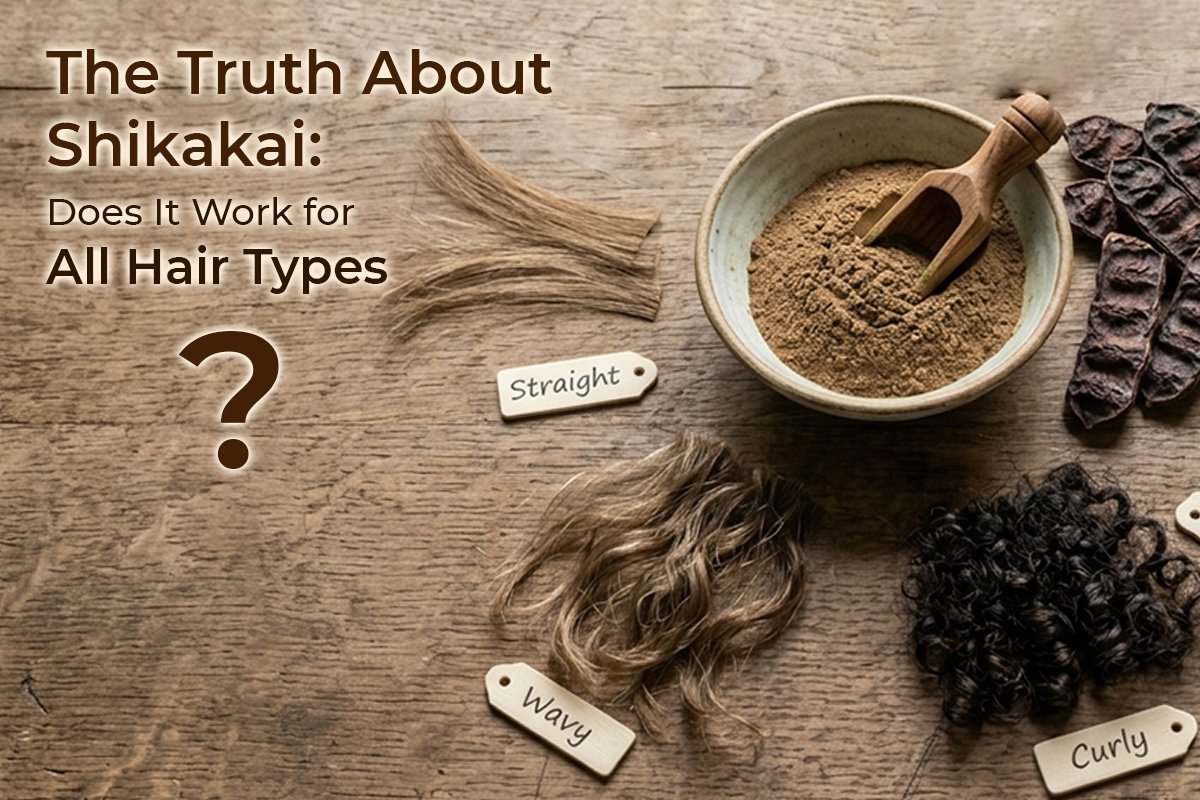
Shikakai Powder: 7 Powerful Truths — Does It Really Work for All Hair Types?
My grandmother never used shampoo. Not once. She washed her hair with a paste made from dried pods she kept in a small tin box. Her hair, even in her 70s, was thick and black. I didn’t understand it back then. Now I do — that paste was shikakai powder.
Today, people across Europe are rediscovering this same ingredient. And honestly? Some results are incredible. But some people try it and give up after the first wash because they didn’t know what to expect. So in this blog, I want to be straight with you. No marketing talk. Just honest information about shikakai powder — what it does, who it works for, and who needs to be a little careful.
So What Even Is Shikakai? Let Me Explain Simply
Shikakai comes from a small thorny plant called Senegalia rugata. It grows mostly in India. The pods of this plant are dried and ground into a fine powder. That powder is what we call shikakai powder.
The name “shikakai” literally means “fruit for hair” in Hindi. And that name actually makes sense. This powder is packed with Vitamins A, C, D, E, and K. It also has natural compounds called saponins, which create a gentle lather when mixed with water. That lather cleans your scalp without removing the natural oils your hair actually needs.
This is a big difference from regular shampoos. Most shampoos strip everything — dirt AND the good oils. Shikakai only takes the dirt. Your scalp stays balanced.
Right now, many shikakai powder suppliers and henna powder manufacturers across India export this ingredient to Europe. Demand has gone up a lot in the last few years, especially in Germany, France, and the UK.
Why Are Europeans Suddenly Interested in Shikakai Powder?
Honestly, the shift started because people got tired of reading ingredient lists they couldn’t understand. Sulfates, parabens, silicones — these are everywhere in commercial shampoos. And more and more people in Europe don’t want them anymore.
According to recent clean beauty reports, over 60% of EU consumers now actively look for natural ingredient labels. That is a big number. And shikakai powder fits right into that demand.
Here is why Europeans specifically are choosing it:
- There are no sulfates or synthetic chemicals in pure shikakai
- It is completely biodegradable — which matters in eco-conscious European markets
- It works really well alongside organic henna and indigo powder for a full herbal hair routine
- You can source it in bulk from wholesale henna suppliers in India at reasonable prices
Many European private-label brands now work directly with henna powder manufacturers in Rajasthan — the region in India where the best herbal hair ingredients come from. This saves cost and ensures quality at the source.
7 Truths About Shikakai Powder Nobody Tells You
This is the honest part. Let’s go through each truth one by one.
Truth 1: It Does NOT Lather Like Shampoo — And That’s Fine
The first time most people use shikakai powder, they panic. They think it is not working because the lather is very mild. But that mild lather is actually the point. You do not need thick foam to clean your hair. The saponins in shikakai clean effectively even with low foam. Give it 3–4 washes before you judge it.
Truth 2: It Works Really Well for Oily Hair
If your scalp gets oily fast, shikakai powder is genuinely one of the best things you can use. It absorbs excess oil and leaves the scalp feeling clean. Not dry — just clean. You can wash with it 2–3 times a week for oily hair. Most people with oily hair see a difference within 2 weeks.
Truth 3: Dry Hair Needs Extra Help
Here is the honest truth. For very dry or coarse hair, shikakai alone can feel a bit rough. The powder cleans well, but it does not add enough moisture for very dry hair types. The fix is simple — mix it with amla powder and use coconut milk instead of water. Or just apply a small amount of coconut oil after washing. Problem solved.
Truth 4: It Is Amazing for Dandruff
Shikakai has natural antifungal and antibacterial properties. That means it targets the root cause of dandruff — fungal buildup on the scalp. If you use it consistently once or twice a week, you will likely notice less flaking and less itching within a month.
Truth 5: It Protects Henna and Indigo Color
This is something many people do not know. If you color your hair with organic henna or indigo powder, regular shampoos can fade the color faster because of their sulfate content. Shikakai powder does not do that. Its low pH is actually compatible with henna and indigo. So if you are on a natural hair color journey, shikakai should be your main cleanser. You can explore some great herbal color options at herbalhaircolors.com that pair well with a shikakai routine.
Truth 6: It Takes Time — Be Patient
Shikakai is not a one-wash miracle. Your scalp has been used to chemical shampoos for years. There is usually a transition period of 2–3 weeks where your scalp adjusts. During this time, your hair might feel different. That is normal. Most people who stick with it through the transition phase report noticeably healthier hair after 4–6 weeks.
Truth 7: Quality of the Powder Matters a Lot
This one is really important. Not all shikakai powder on the market is the same quality. Some powders are mixed with fillers or stored poorly and lose their potency. Always buy from a trusted source. Look for shikakai powder suppliers or henna powder manufacturers who provide proper documentation and certifications. Especially if you are in Europe, make sure your supplier meets EU import standards.
A Real Story: How a Netherlands Brand Found the Right Supplier
In 2024, a small herbal hair care brand from the Netherlands was building their product line. They wanted to launch a shikakai powder-based shampoo bar and also needed organic henna and indigo powder for other products. The challenge was finding a manufacturer who could guarantee purity, provide halal and GMP certifications, and handle EU-compliant packaging.
They found Kirpal Export Overseas (KEO) — a Rajasthan-based manufacturer and exporter founded around 2000 by Mr. Sunil Walia. KEO holds ISO, GMP, and HALAL certifications. They grow their own henna and maintain full traceability from farm to final product.
Here is how the partnership worked:
- The Netherlands brand emailed for samples of shikakai powder, Sojat henna, and indigo powder
- KEO sent samples with full certification documentation within a week
- The brand tested the samples in their lab — purity and quality passed EU standards
- They placed a bulk wholesale order with custom OEM packaging under their own brand name
- KEO used active packaging to ensure ingredient freshness during the long shipping distance
- The products launched in organic retail stores across the Netherlands and Belgium
The feedback from end consumers was strong. The shikakai shampoo bar especially became a bestseller. The brand now reorders quarterly.
This kind of result is possible when you work with certified henna manufacturer in Rajasthan partners who understand international requirements. You can also explore verified henna powder manufacturers in India through resources like henna-manufacturers.com and hennasupplier.com when shortlisting suppliers.
How to Actually Use Shikakai Powder at Home — 5 Easy Methods
No complicated steps here. These are simple, practical methods.
Method 1 — The Basic Wash Take 2 tablespoons of shikakai powder. Add warm water slowly and mix until it becomes a smooth paste. Wet your hair first. Apply the paste to your scalp and hair. Massage for 2–3 minutes. Leave it for 5 minutes. Rinse well with water.
Method 2 — Shikakai + Reetha for More Lather Mix shikakai powder with equal amounts of reetha (soapnut) powder. This gives slightly more foam and is great for oily scalp types. Works well for thick hair too.
Method 3 — Shikakai + Henna Mask for Shine and Color Mix shikakai powder with organic henna and warm water. Apply this as a hair mask. Leave for 30–40 minutes. Rinse. This gives shine, conditions your hair, and adds a gentle warm tone. If you are unsure which shade works for your skin tone, this guide on choosing the right hair color is really helpful.
Method 4 — Shikakai + Amla for Dry Hair Combine shikakai with amla powder in equal parts. Use coconut milk instead of plain water to mix the paste. This version is much more moisturizing and ideal for dry, curly, or coarse hair.
Method 5 — Weekly Scalp Treatment Make a thin liquid using shikakai powder and water. Apply only to your scalp using a bottle or brush. Leave for 15–20 minutes. This works well as a dandruff and scalp treatment even if you use regular shampoo on the hair shaft.
Shikakai and Natural Hair Color: Why They Go Together
If you have recently switched to natural hair color manufacturers’ products — or you are thinking about it — then you need to understand one thing. Chemical shampoos are not ideal for henna or indigo-colored hair. They fade the color faster and make the hair drier.
Shikakai powder does the opposite. Its slightly acidic pH actually helps seal the hair shaft after coloring. This means henna-based hair color lasts longer when you wash with shikakai regularly.
Many herbal hair color manufacturers actually recommend shikakai as part of the post-color care routine. Indigo powder and Sojat henna in particular respond really well to shikakai cleansing. If you are looking for quality herbal color options for hair, the 7 best hair colors by skin undertone guide from Kirpal Export Overseas is worth reading.
For more herbal hair care discussions from real users, this Google community thread also has some good insights.
Who Should Be Careful With Shikakai Powder?
In the interest of being honest — here are situations where you should go slow:
- Very dry, brittle hair — always mix with a moisturising ingredient, never use alone
- Hair with heavy chemical treatments — permed or relaxed hair needs extra moisture; test first
- Synthetic colour-treated hair — shikakai may slightly alter tone over several washes; do a strand test first
- People with very low porosity hair — the paste may sit on top rather than absorb; warm the mix slightly before applying
For most people though, shikakai powder is gentle enough to use without any worry.
FAQs: Quick Honest Answers
Q: How often should I use shikakai powder? 2–3 times per week for oily hair. Once a week for dry or normal hair. Start slow if you are new to it.
Q: Will shikakai cause hair fall? No. Some people notice slight shedding in the first week or two — that is just the scalp clearing out. Actual hair fall does not increase with shikakai use.
Q: Can I mix shikakai with regular shampoo? Yes. Add a small amount to your shampoo bottle if you are not ready to fully switch. This is a gentle way to transition.
Q: Where can I source bulk shikakai powder in Europe? Most European buyers source from henna supplier in India partners who export certified herbal powders. Look for wholesale henna powder suppliers who also carry shikakai and can provide COA (Certificate of Analysis) documents.
Q: Does it work for curly hair? Yes — but always use a leave-in conditioner or oil after washing. Curly hair needs extra moisture that shikakai alone does not fully provide.
Final Thoughts
Shikakai powder is not magic. It is not a miracle overnight cure. But used correctly and consistently, it genuinely works for most hair types. Oily hair loves it. Fine hair loves it. Dandruff-prone scalps love it. Dry hair can love it too — with the right mix.
The key is patience, the right formula for your hair type, and sourcing good quality powder from reliable shikakai powder manufacturers or henna powder manufacturers in India.
If you are a brand or buyer in Europe looking to build a natural hair care line, there are excellent henna wholesale suppliers and OEM henna manufacturers who understand your market and your certification needs. The case of the Netherlands brand above is proof that it works — when you partner right.
Your hair deserves better than a list of chemicals you cannot pronounce. Shikakai has been working for thousands of years. Maybe it is time to give it a real chance.