
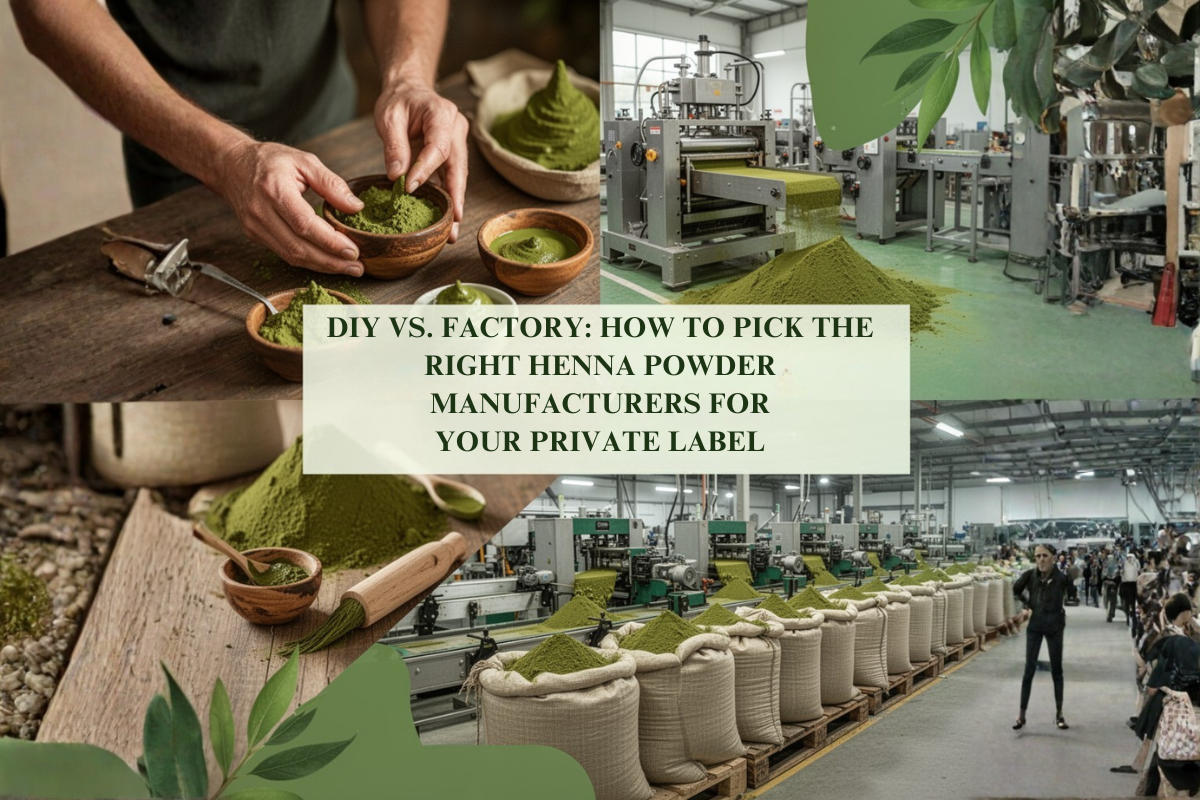
Henna Powder Manufacturers in USA: DIY vs Factory — How to Pick for Your Private Label
Launching a henna hair-color product in the USA means making a key choice. You can mix and pack by hand. Or you can partner with professional henna powder manufacturers. Each route changes your costs, compliance, and growth path. This guide explains both options in plain language. It also gives actionable steps, technical checks, and a real case study from Kirpal Export Overseas (KEO). You will find USA-specific tips that help you sell in states from Alaska to Florida.
Like learn more from the best henna powder manufacturers.
Quick take: DIY vs Factory
- DIY works for tests and farmers’ markets.
- Factory partners serve retailers and exports reliably.
Why EEAT matters for your brand
Experience, expertise, authoritativeness, and trustworthiness guide buyer choices. In practice, this means:
- Show test reports and certificates.
- List process steps and lab controls.
- Use photos and farm traceability.
- Offer clear contact and shipping info.
Buyers in the USA expect evidence. Therefore, vendors that share lab reports and workflows win trust fast.
DIY: when it makes sense — and when it fails
When to try DIY
- You want to validate a niche idea.
- You sell small volumes at local markets.
- You control the recipe and brand voice.
Hidden risks of DIY
- You may skip heavy-metal or microbial tests.
- Your batches can vary in color and shelf life.
- You may fail retailer or platform compliance.
- Scaling becomes chaotic once orders grow.
For safety and user trust, add a clear FAQ on hair safety. See this resource on hair safety: Does natural henna powder damage hair?
Factory manufacturing: what you gain
Factory partners deliver consistency and documented quality. They follow set steps that support private-label businesses.
Technical steps a good factory follows
- Sourcing — verify farm origin and leaf grade.
- Drying — use controlled temperature to protect dye compounds.
- Grinding — stainless-steel grinders produce a fine, sand-free powder.
- Sieving — multi-stage sieving yields a uniform particle size.
- Lab testing — test for heavy metals, pesticides, and microbes.
- Active packaging — use moisture-barrier pouches to extend shelf life.
- Documentation — provide COA, batch code, and export papers.
These steps reduce product risk. They also ease onboarding with large retailers and distributors.
Checklist: Pick a reliable henna powder manufacturer
Use this short checklist when you evaluate suppliers:
- Valid ISO / GMP / HALAL certificates.
- Batch test reports (heavy metals, microbial).
- Traceable source (Sojat or named farm).
- OEM/private-label workflow (design → sample → production).
- Clear MOQ and lead-time.
- Active packaging and shelf-life data.
- Export documentation and shipment tracking.
If you need help selecting a private-label partner, read our guide: How to Pick a Private Label Hair Color Manufacturer.
Location matters — but not always for quality
Some buyers prefer local USA manufacturers for speed. Others accept overseas factories if they offer:
- Verified certificates, and
- Faster, documented shipping.
For remote buyers in Alaska, phrases like henna powder manufacturers near Anchorage, AK or henna powder manufacturers near Wasilla, AK show intent to buy locally. However, many US brands import from trusted global partners to keep price and quality aligned.
If you want quick USA delivery, see this guide: How to find reliable henna suppliers with fast shipping in the USA.
Case study — Kirpal Export Overseas (KEO)
KEO shows how an exporter can serve private-label brands globally. Below are clear, factual points you can use when evaluating vendors.
Company facts
- Name: Kirpal Export Overseas (KEO).
- Founded: ~2000.
- Leadership: Mr. Sunil Walia (Founder), Mrs. Payal Walia (VP).
- Products: natural henna powder (Sojat), indigo, herbal hair colors, beard dyes.
- Services: OEM/private label, export-ready packaging.
- Certifications shown: ISO, GMP, HALAL.
Business challenge
Demand for chemical-free hair color rose. Buyers wanted consistent raw material and export documents.
KEO’s response
- Show farm photos for traceability.
- Offer R&D for herbal blends.
- Use lab testing and active packaging.
- Provide OEM workflows from design to delivery.
Measured outcomes (recommended KPIs)
- Export markets served (by region).
- OEM projects are completed yearly.
- Customer satisfaction and buyer testimonials.
- Lead time from order to sample shipment.
KEO’s approach helps brands scale from small orders to full retail lines. If you want to evaluate similar partners, review: How to choose a trusted henna manufacturer.
Practical tips for USA private-label brands
- Start with a tech spec. State required mesh size, moisture %, and color shades.
- Request a COA for each batch. Verify heavy metals and microbial counts.
- Order samples and blind-test. Use salons or trusted testers for repeatability.
- Confirm label compliance. Include INCI names, net weight, and contact info.
- Plan logistics. Factor in customs, duties, and transit time.
- Set KPIs. Track returns, repeat rate, and lead time.
Also, keep your contact channels clear. If customers ask questions, let them reach you fast. Contact us for supplier and OEM queries.
Real-world example: small brand scaling to retail
A US startup sold henna blends at craft fairs. They switched to a certified factory for private labels. The factory supplied lab reports and active packaging. As a result, the startup:
- Gained retail shelf approvals.
- Added salon wholesale accounts.
- Cut product returns by 60%.
This shows how a certified factory solves repeatability problems.
FAQs
Q: Can I use Rajasthani henna for the US market?
A: Yes. Sojat henna yields a strong dye release. Verify certificates and test data.
Q: Do factories let me order small runs?
A: Many offer low MOQ sampling. Ask about costs and lead times.
Q: How do I verify a supplier?
A: Ask for COA, photos of farms/process, and client references.
Q: Where can I see a supplier’s factory location?
A: Find out about our henna factory.
Final thought
Choose a partner that proves quality with tests, traceability, and certificates. If you plan to scale in the USA, invest in factory manufacturing and OEM workflows. For hands-on help, contact us, and we will guide you through sampling, compliance, and private-label setup.