
Henna Manufacturers Reveal the Truth
You Think the Sample Looks Fine. But Is It Really?
Let me tell you something most people in this business learn the hard way.
You find a supplier online. The price is good. You ask for a sample. It looks okay, smells right, and the color payoff seems decent. So you go ahead and place a bulk order.
Then three months later, your customer messages you. Her scalp is irritated. Another one says the color faded in two washes. A third one just posts a bad review online.
You call the supplier. He says the product is fine. You have nothing to show otherwise.
That is what happens when you skip the COA.
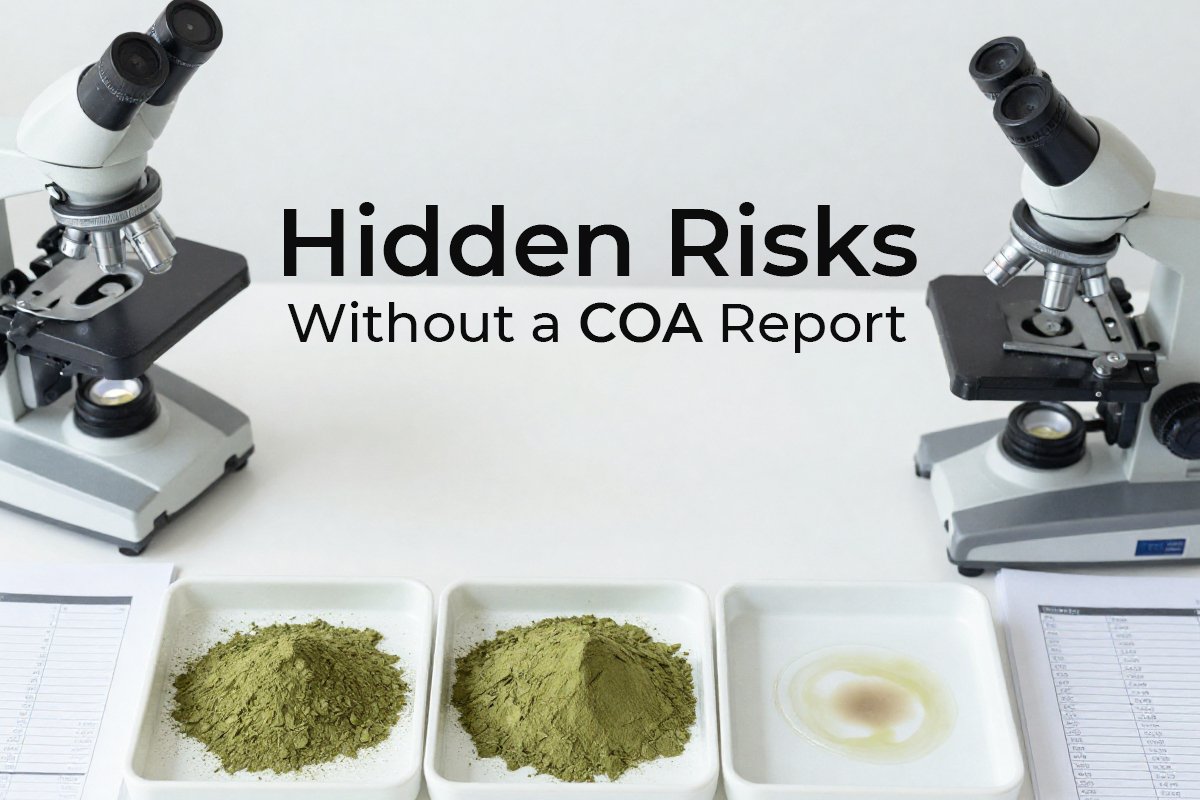
A Certificate of Analysis (COA) is a lab-tested document. It tells you exactly what is inside your product — not what the supplier says is inside it. For anyone sourcing from henna manufacturers, skipping this step is not just risky. It is a ticking clock.
Here in Singapore especially, where retail compliance is strict and customers are informed, this one document can make or break your business.
Let’s get into it.
First — What Exactly Is a COA Report?
Think of a COA like a report card for your product. Except instead of grades, it shows you lab results.
A proper COA from a trusted henna supplier will tell you:
- How much moisture is in the powder
- Whether any heavy metals like lead or arsenic are present
- If there are bacteria or fungi in the batch
- Whether PPD — a chemical that is outright banned in many countries — was found
- The lawsone content, which tells you how potent and pure the henna actually is
Without this information, you are guessing. And in a regulated market like Singapore, guessing costs money.
Now let’s talk about what happens when buyers skip this step.
Risk #1 — You Could Be Selling Something Contaminated Right Now
This one is uncomfortable. But it needs to be said.
Some suppliers — not all, but enough — blend cheap fillers into henna powder to bulk up the weight. Others add synthetic dyes to make the color look richer than it actually is. Some use old or poorly stored raw materials that carry microbial contamination.
None of this is visible to the naked eye.
You will not know it until a customer reacts. And by then, the damage is already done.
Here is a real situation that happened:
A Singapore-based private label brand was sourcing wholesale henna powder from a supplier who seemed reliable. Price was good. Communication was decent. No COA was asked for.
After about six months of selling, customer complaints started coming in. Scalp redness. Itching. One serious allergic reaction.
The brand tested the batch independently. High levels of PPD — a chemical allergen — showed up in the results.
They had to pull the product. Lost a retail listing. Paid compensation. And spent the next year rebuilding trust.
One COA check at the start would have caught all of this.
Risk #2 — You Cannot Prove Anything to Retailers or Regulators
Singapore’s retail market is competitive and document-heavy. Platforms like Lazada, Shopee, and major pharmacy chains increasingly ask for product documentation before listing anything in the cosmetics or hair care category.
A COA is part of that paperwork.
No COA means delays. Or worse — rejections.
If you are building a private label line of herbal hair colors or organic henna products, your launch timeline could get pushed back by weeks just because you cannot produce lab test results.
And if you are re-exporting to markets like the EU, Australia, or the UK — all of which have strict cosmetic import laws — a COA is not optional. It is expected.
Reputable henna suppliers know this. They have COA documentation ready as part of their standard export process. If your current supplier does not, that is worth thinking about.
Risk #3 — “Natural” and “Organic” Mean Nothing Without Proof
Here is something that frustrates a lot of buyers once they learn it.
Any supplier can write “100% natural” on a label. Anyone can call their product “chemical-free” or “organic.” These are words. Without lab data, they prove exactly nothing.
The market for natural hair color manufacturers is growing fast. More brands want clean, green, plant-based products. And naturally, more suppliers are jumping on that language to sell more product — whether it is truly natural or not.
According to information on henna’s chemical composition, genuine pure henna contains a compound called lawsone. A proper COA will confirm the lawsone percentage and show whether any synthetic additives or metallic salts were detected.
For a genuinely clean organic henna product, look for:
- Lawsone content between 1.5% and 3.5%
- Zero detection of metallic salts
- No synthetic colorants found
- Microbial counts within safe cosmetic limits
If your supplier cannot back their “organic” claim with lab numbers, you need to ask yourself why. And you might also find this guide on choosing the right hair color useful when educating your own customers on what actually matters in hair color choices.
Risk #4 — One Old COA Does Not Cover Every New Batch
This is the one even experienced buyers get wrong.
Some suppliers share a COA once — during the sample stage — and never update it. They show you one document, and you assume that covers all future orders.
It does not.
Every batch is different. The Sojat henna crop quality changes with rainfall and harvest season. Storage conditions vary. Processing can differ between production runs. What was true of Batch A from January may not be true of Batch B from July.
Sojat henna manufacturers who take quality seriously issue a new COA for every single batch. The batch number on the document should match the batch number on your packaging. If it does not, something is off.
When working with henna powder manufacturers in Rajasthan — particularly those with ISO and GMP certifications — this traceability is built into their process. Companies like Kirpal Export Overseas run documented quality checks from their farms in Sojat all the way to your shipment. That kind of system is what gives buyers real peace of mind.
Risk #5 — No Paper Trail Means No Legal Protection
Picture this. A customer has a bad reaction to a product you sold. They come to you. You go to your supplier. Supplier says the product is fine. You have no COA, no test data, no documentation of any kind.
You have nothing.
No paper trail means you cannot prove due diligence. You cannot show that you checked. You cannot demonstrate that you took reasonable steps to verify what you were selling.
That is a legal and financial exposure that nobody wants to face.
A COA gives you a documented record. It shows — in writing, with lab data — that you verified the product before putting it in front of customers. That matters a lot if things go sideways.
Build a supplier documentation checklist and stick to it:
- Batch-specific COA from an accredited lab
- MSDS — Material Safety Data Sheet
- Active certifications: ISO, GMP, HALAL
- Full ingredient declaration
- Country of origin certificate
If a henna powder supplier cannot produce these, you do not need to negotiate. You just need to move on.
What Responsible Henna Manufacturers Actually Do
The best henna powder manufacturers in India do not treat COA documentation as extra work. It is just part of how they operate.
Kirpal Export Overseas (KEO) has been in this business for over 25 years. They manufacture Sojat henna powder, indigo powder, and herbal hair colors for export markets across Asia, the Middle East, and Europe. Their certifications — ISO, GMP, and HALAL — are not just badges on a website. Each one requires systematic testing, documented quality protocols, and third-party verification.
What sets them apart is the traceability. Their henna comes from their own farms in Sojat, Rajasthan. Buyers can see farm photos, buyer visit galleries, and before-and-after media on their website. There is a visible chain from crop to export.
For Singapore importers sourcing wholesale henna powder, indigo powder, or looking at OEM private label manufacturing, working with a supplier who is documentation-ready removes the biggest risks from the table.
You can also check their verified business profile here to see buyer feedback and reviews.
Singapore Importers — Here Is Your Quick Checklist
Singapore’s market does not forgive sloppy sourcing. Whether you are selling through retail chains, salons, or online platforms, you need your paperwork in order.
Before confirming any order for henna powder wholesale or herbal hair color, run through this:
- ✅ Ask for a batch-specific COA — not a generic one
- ✅ Check that the testing lab is third-party and accredited
- ✅ Verify heavy metal limits (lead and arsenic especially)
- ✅ Confirm zero PPD and no synthetic colorants
- ✅ Match the batch number on the COA to your packaging
- ✅ Cross-check ISO, GMP, HALAL certificates on the manufacturer’s site
- ✅ Ask how the product is packaged for long-shelf-life export (active packaging matters)
If any of these boxes cannot be ticked, pause the order.
FAQs — COA Reports and Henna Sourcing for Singapore Buyers
Q: Is a COA legally required to import henna powder into Singapore? It is not always a hard legal requirement, but Singapore’s HSA and major retailers increasingly expect it. Treat it as mandatory for your own protection.
Q: How often do I need a new COA? Every batch. Do not let a supplier reuse an old one for a new shipment.
Q: Should I trust a COA from the manufacturer’s own lab? Prefer third-party accredited labs. They carry far more weight with regulators and buyers.
Q: What if a supplier will not give me a COA? Walk away. That is not a negotiation point — it is a red flag.
Q: Do indigo powder manufacturers need to provide COAs too? Absolutely. Indigo powder used in natural hair color applications needs the same safety testing as henna — heavy metals, microbial safety, and purity verification.
Q: Can a COA protect me if a customer sues? It does not guarantee anything legally, but it shows documented due diligence. That matters a great deal in any dispute.
The Bottom Line
A COA is not paperwork for paperwork’s sake. It is the only real proof that what you are selling is what you think you are selling.
The henna manufacturer you choose should make this easy for you — not something you have to chase. If you are sourcing Rajasthani henna powder, organic henna, indigo powder, or henna-based hair colors for the Singapore market, documentation should be part of the conversation from day one.
Do not wait for a recall to learn this lesson. Ask for the COA before you confirm the order. Every single time.